AT A GLANCE
The best glass matches the drink’s temperature, aroma, texture, serving style, and volume, so you do not need a separate glass for every recipe.
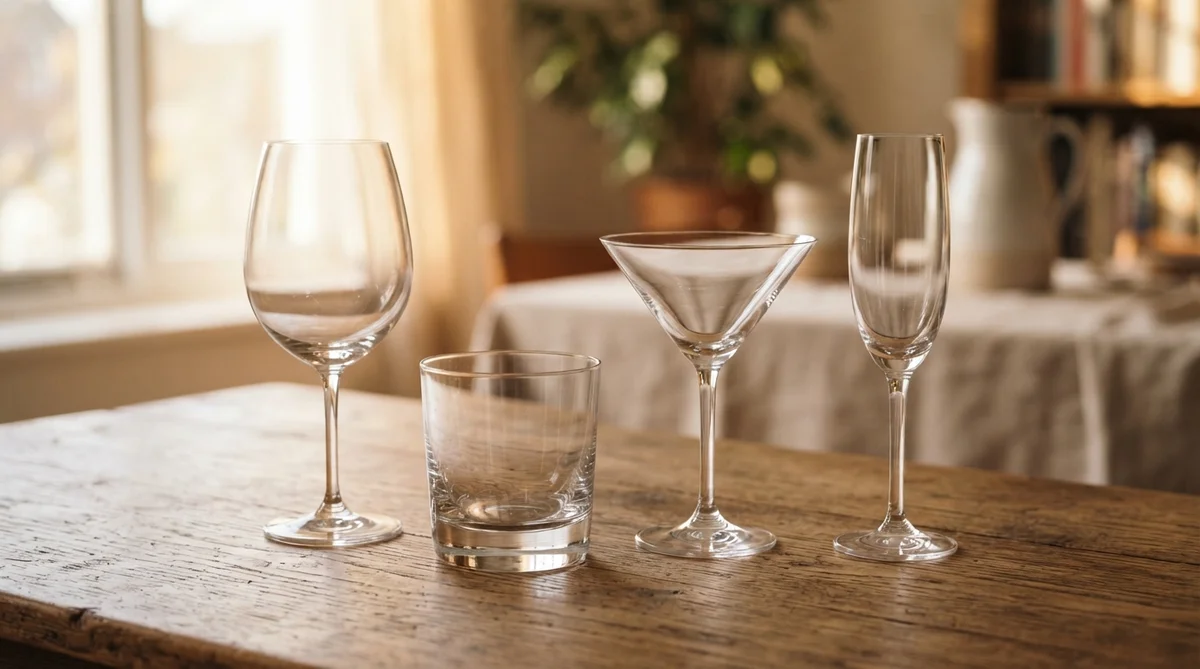
- Wine: use a broad bowl for red wine, a narrower bowl for white and rosé, and a flute or coupe for sparkling wine.
- Cocktails: choose rocks glasses for spirit-forward drinks, highballs for tall mixed drinks, and stemmed glasses for cocktails served up.
- Beer: pint, pilsner, wheat beer, and tulip glasses each change how foam, aroma, and carbonation reach you.
- Home bar starter set: buy rocks, highball, wine, beer, and coupe glasses before specialty shapes.
The right choice changes most when the drink needs aroma, ice, carbonation, heat resistance, or a particular serving volume.
How to Choose the Right Glass for Different Types of Drinks
Choose glassware by asking what the drink needs from its vessel: space for ice, room to release aroma, insulation from your hand, or a shape that supports a stable foam head. A glass can improve the experience, but it cannot rescue a poorly balanced drink or warm wine.
- Match the volume: a 90 ml cocktail looks and tastes lost in a large wine glass, while a tall Collins drink needs room for ice and mixer.
- Match the temperature: stems keep your hand away from chilled wine, while a handle makes hot coffee cocktails safer to hold.
- Match the aroma: a tapered rim concentrates whisky, brandy, and some beers, while a broad bowl gives red wine space to open.
- Match the texture: a narrow flute preserves bubbles, and a tulip beer glass supports a lasting head.
The Serious Eats glassware guidance treats shape as a practical tool for aroma, temperature, and drinking comfort rather than a strict rulebook. Use the conventional glass when it helps, then choose a sturdy alternative when washing, storage, or breakage matters more.
Quick Guide to Drinkware by Beverage
| Drink | Best glass | Why it works | Useful alternative |
|---|---|---|---|
| Red wine | Large-bowl wine glass | Supports swirling and aroma | Universal wine glass |
| Beer | Pint, pilsner, or tulip | Balances foam, carbonation, and aroma | Small stemmed beer glass |
| Spirit-forward cocktail | Rocks glass or coupe | Fits ice or a neat, chilled pour | Nick & Nora glass |
| Highball | Highball or Collins | Holds ice, spirit, and mixer | Large tumbler |
| Whisky or brandy | Glencairn or snifter | Directs aromas toward the nose | Small rocks glass |
| Hot cocktail | Irish coffee glass | Heat-resistant bowl with handle | Ceramic mug |
Wine Glasses
Wine glasses are designed around aroma, temperature, and controlled sipping. You can serve most wines in one good universal glass, but different bowls make particular styles easier to smell and taste.
- Hold a stemmed glass by the stem or foot to avoid warming chilled wine with your palm.
- Fill only to the bowl’s widest point or lower, leaving space to swirl without spilling.
- Use a smaller pour for aromatic wines when you want to compare several bottles at one meal.
Red Wine Glasses
Red wine glasses usually have a larger, rounder bowl that gives Pinot Noir, Syrah, and Cabernet Sauvignon room to swirl. The broad surface exposes more wine to air, while the rim directs aromas toward your nose.
A Burgundy-style glass has an especially wide bowl for fragrant, lighter-bodied reds. A Bordeaux-style glass is taller and more tapered, which suits structured Cabernet-based wines. These are useful distinctions, not requirements; a universal glass handles both styles well.
White and Rosé Wine Glasses
White and rosé wines work well in a smaller bowl because the reduced surface area helps preserve chill and delicate aromas. Sauvignon Blanc, Albariño, and dry rosé are especially easy to drink from a narrower universal wine glass.
Fuller-bodied Chardonnay can benefit from a broader bowl, particularly when it has oak or lees texture. For practical wine-list advice, compare the style and serving temperature rather than ordering by glass shape alone, as explained in this restaurant wine list guide.
Sparkling Wine Flutes and Coupes
A flute’s tall, narrow bowl slows the escape of carbon dioxide and preserves a stream of bubbles. A coupe has a broad, shallow bowl that makes aroma and presentation more prominent but allows sparkling wine to lose its fizz faster.
For Champagne or Prosecco, a tulip-shaped sparkling glass is a useful compromise: it retains bubbles better than a coupe while offering more aroma than a very narrow flute. The Michelin Guide often treats glass choice as part of the restaurant’s service language, but the wine’s temperature and freshness still matter more than ceremony.
Beer Glasses
Beer glasses influence foam, aroma, carbonation, and how quickly a beer warms. Pour beer down the side of a clean glass, then straighten it to build a head that releases malt and hop aromas.
- Choose a glass that leaves at least a small space above the beer for foam.
- Use a chilled glass only when it is clean and free of freezer frost, which can suppress aroma and over-chill flavor.
- Rinse the glass before pouring if detergent residue or dust could collapse the head.
Pint and Nonic Glasses
A standard pint glass suits many ales, stouts, and casual pours because its straight sides are easy to stack and clean. A nonic pint has a raised bulge near the rim, which improves grip and helps prevent glasses from sticking together.
The shape is practical rather than perfectly style-specific. A delicate lager or aromatic India pale ale can show more detail in a narrower or stemmed glass.
Pilsner and Weizen Glasses
A pilsner glass is tall and tapered, displaying a pale lager’s color, carbonation, and foam. Its narrow base and wider rim make the beer look lively while giving the aroma a path upward.
A Weizen glass is tall with a pronounced curve near the top, creating room for the thick head typical of wheat beer. Pour slowly, then swirl the last sediment-rich portion in the bottle before adding it.
Tulip, Snifter, and Beer Mug Glasses
Tulip and snifter-style beer glasses suit strong ales, Belgian beers, and barrel-aged styles because their bowls collect aroma and their rims help support foam. A beer mug or stein is better for easy handling, generous pours, and beers where sturdy service matters more than concentrated aroma.
Cocktail and Mixed-Drink Glasses
Cocktail glassware separates drinks served over ice from drinks chilled and served without ice. It also signals how much dilution, mixer, and garnish the recipe is meant to carry.
- Use a heavy base for muddled Old Fashioneds and drinks with large ice cubes.
- Use tall glassware when a cocktail contains substantial soda, tonic, ginger beer, or juice.
- Chill a stemmed glass before serving a Martini, Daiquiri, or other cocktail served up.
Rocks and Old Fashioned Glasses
A rocks glass, also called an Old Fashioned or lowball glass, is short and stable, usually with a heavy base. It suits an Old Fashioned, Negroni, White Russian, or neat pour of whisky because it accommodates large cubes without excessive empty space.
Double rocks glasses hold more ice and mixer, while a smaller rocks glass keeps a neat spirit pour visually proportionate. The names overlap across bars, so confirm the size when ordering a large-format cocktail.
Highball and Collins Glasses
A highball glass is relatively short and broad, while a Collins glass is taller and narrower. Both suit long drinks such as a Gin and Tonic, Mojito, Paloma, Dark ’n’ Stormy, or Tom Collins.
Use a Collins glass when you want a tall, refreshing drink with plenty of ice and mixer. Use a highball when the recipe is shorter or you prefer a wider aroma surface and easier stirring.
Martini, Coupe, and Nick & Nora Glasses
Martini, coupe, and Nick & Nora glasses serve cocktails chilled and without ice. Their open bowls let you smell the drink, while the stem keeps your hand away from the cold liquid.
A Martini glass has a wide V-shaped bowl and can feel top-heavy when filled generously. A coupe is rounder and more stable, while a Nick & Nora glass has a smaller bowl that suits a restrained 75 to 120 ml pour.
Margarita and Hurricane Glasses
A Margarita glass has a stepped bowl and a broad rim that supports a salt garnish, although a coupe or rocks glass is now common. The vessel should leave enough room for the tequila, citrus, orange liqueur, ice, and garnish without making the drink cumbersome.
A Hurricane glass is tall and curving, traditionally used for fruit-forward rum drinks. Its dramatic shape suits a generous, colorful serve, but a highball is easier to store and usually easier to hold.
Glasses for Spirits and Liqueurs
Spirit glassware controls aroma and portion size more than it changes the liquid itself. Choose a small, tapered glass for nosing and a sturdy tumbler when you want ice, dilution, or a relaxed pour.
- Neat spirits: use a Glencairn, copita, or small tulip glass for aroma.
- Spirits over ice: use a rocks glass with one large cube or sphere.
- Liqueurs: use a cordial glass when the pour is small and intensely flavored.
Shot and Cordial Glasses
A shot glass is designed for a small, fast pour, while a cordial glass is better for sipping liqueurs such as amaretto, limoncello, or herbal digestifs. Standard sizes vary by country and venue, so do not assume that every shot represents the same alcohol volume.
Brandy Snifters
A brandy snifter has a broad bowl, short stem, and narrower rim that concentrates aroma. The bowl can be warmed gently by the hand, although excessive heating pushes alcohol vapors forward and can make the brandy seem harsh.
Whiskey and Cognac Glasses
A Glencairn-style whisky glass has a broad bowl and tapered opening that helps you assess color and aroma in a small pour. Cognac can work in a snifter, tulip glass, or small wine glass, depending on whether you value tradition, aroma, or stability.
For an everyday pour, a rocks glass is perfectly sound, especially when adding water or ice. Let the spirit rest briefly, then smell before sipping.
Everyday Drinking Glasses
Everyday glassware should prioritize durability, stackability, and a comfortable weight. A small collection of tumblers can cover water, juice, iced tea, soft drinks, and many casual cocktails.
- Choose straight-sided tumblers for easy stacking and fast cleaning.
- Choose textured or tempered glasses when frequent handling makes breakage a concern.
- Keep separate small glasses for juice and large glasses for water or iced drinks.
Tumblers and Juice Glasses
A tumbler is a flat-bottomed glass without a stem, ranging from a small juice glass to a large water or iced-drink vessel. Short tumblers suit breakfast juice and neat spirits, while medium tumblers handle milk, soda, and modest cocktails.
Water and Beverage Glasses
A water glass should feel stable, leave room for ice if needed, and hold enough for a meal without constant refills. For non-alcoholic drinks, pair the vessel with the drink’s texture and temperature, as shown in this practical guide to non-alcoholic drink pairing with food.
Carafes and Pitchers
Carafes suit table service for water, wine, or batch cocktails, while pitchers hold larger quantities for groups. A narrow neck helps with pouring control, and a wide opening makes cleaning easier but exposes wine or juice to more air.
Mugs and Glasses for Hot Drinks
Hot-drink glassware needs heat-resistant material, a safe handle, and enough capacity for steam and toppings. Never pour boiling liquid into an ordinary cold glass, because thermal shock can crack it.
- Warm the vessel with hot water before serving coffee cocktails or tea.
- Check that the handle is firmly joined and does not become dangerously hot.
- Leave headroom for whipped cream, foam, marshmallows, or a citrus garnish.
Irish Coffee Glasses
An Irish coffee glass is heat-resistant, stemmed, and fitted with a handle. It displays the layers of coffee, whiskey, sugar, and cream while keeping your hand away from the hot bowl.
Glass Coffee Mugs and Tea Glasses
Double-wall glass mugs insulate hot coffee and tea while keeping the outer surface relatively comfortable to hold. Traditional tea glasses vary by culture, from small tulip-shaped Turkish glasses to heatproof cups designed for mint tea.
Moscow Mule Mugs
A Moscow Mule mug is traditionally made from copper and served with ginger beer, vodka, and lime, but glass highballs are practical alternatives. The drink’s cold temperature, carbonation, and lime aroma matter more than using a particular metal.
Specialty Glassware for Frozen and Dessert Drinks
Frozen and dessert drinks need wide openings, stable bases, or extra capacity for blended ice, cream, and toppings. A hurricane, goblet, or oversized coupe can work if the vessel is strong enough and the drink remains balanced.
- Frozen Margarita: use a Margarita glass, coupe, or rocks glass with a salted rim.
- Piña Colada: use a hurricane or large goblet with enough space for blended ice.
- Milkshake or cream cocktail: use a fountain glass or sturdy handled mug.
- Affogato: use a small heat-resistant tumbler or dessert glass that shows the espresso melting into ice cream.
Do not overfill decorative glassware. A top-heavy frozen drink is difficult to carry, and a narrow stem can break under the weight of a thick garnish.
Stemmed vs. Stemless Glassware: Which Is Better?
Stemmed glasses are better when temperature and aroma matter, while stemless glasses are better for stability, storage, and casual service. Neither style is automatically superior.
| Feature | Stemmed | Stemless | Best use |
|---|---|---|---|
| Temperature | Hand stays away from bowl | Hand warms the drink faster | Stemmed for chilled wine |
| Stability | More likely to tip | Stable on busy tables | Stemless for outdoor dining |
| Aroma | Often paired with shaped bowls | Can still have a useful bowl | Either for everyday wine |
| Storage | Needs more shelf or rack space | Usually easier to stack | Stemless for small kitchens |
| Formality | Traditional restaurant presentation | Relaxed and versatile | Choose by occasion |
How to Care for and Choose Quality Drink Glassware
Choose glasses with a shape you will use, a weight you can handle, and a rim that feels even rather than razor-thin. Crystal can offer clarity and a refined rim, but quality soda-lime or tempered glass is often the smarter choice for everyday durability.
- Inspect the rim: avoid chips, uneven edges, and hairline cracks before use.
- Check the base: a stable foot or thick base reduces tipping during service.
- Wash promptly: rinse wine, beer, cream, and citrus residue before it dries.
- Use suitable heat: only heat-resistant glass belongs in a dishwasher’s hot cycle or near boiling liquid.
- Store carefully: keep stemware upright unless the manufacturer specifically recommends hanging it.
- Polish safely: support the bowl and stem separately instead of twisting them against each other.
For a useful home collection, start with six to eight rocks glasses, highballs, universal wine glasses, and one stemmed cocktail shape. Add beer, whisky, hot-drink, or dessert glassware only when you regularly serve those drinks, and check manufacturer care instructions because sizes, materials, and dishwasher guidance change between products.