
AT A GLANCE
Chettinad cuisine offers one of South India’s most complex dining traditions, defined by freshly dry-roasted whole spices, sun-dried ingredients, and rich maritime trade heritage. Originating from Tamil Nadu’s Chettinad region, this style balances aromatic heat with distinct sweet and sour undertones.
- Developed by the Nagarathar merchant community, incorporating trading influences from Southeast Asia since the 18th century.
- Utilizes a signature blend of up to 18 spices, featuring rare aromatics like kalpasi (black stone flower) and star anise.
- Encompasses more than 50 traditional recipes, ranging from fiery game meat curries to heirloom black rice desserts.
While widely celebrated for pepper-heavy meat curries, authentic ritual feasts remain strictly vegetarian, and menu offerings at specific heritage venues require check-before-you-go verification.
What Is Chettinad Cuisine? History and Origins
Chettinad cuisine is the traditional cooking style of the Nagarathar community, also known as Chettiars, hailing from 74 villages in the Sivaganga and Pudukkottai districts of Tamil Nadu. The region’s hot, dry climate spurred early culinary innovations in sun-drying meats and salting vegetables to ensure long shelf life.
During the 18th and 19th centuries, Chettiar merchants expanded trading networks across Burma, Ceylon, the Dutch East Indies, Malaysia, and Vietnam. These maritime voyages introduced international ingredients and techniques back to their home kitchens, fundamentally shaping their food culture.
- Burmese influence: Introduction of sticky black rice, known locally as kavuni arisi, used in sweet puddings and breakfast dishes.
- Malaysian and Straits influences: Integration of sweet-sour profiles, coconut milk reductions, and unique starches.
- Coastal adaptations: Adoption of varied seafood and meat dishes learned while traveling along the Malabar Coast.
As recorded in culinary archives from Serious Eats, this global trading footprint transformed a rural, semi-arid district into a major hub of internationalized flavor profiles.
Key Characteristics and Flavor Profile
The chettinad food flavor profile is defined by aromatic, layered warmth rather than raw, blistering chili heat. Freshly ground spice masalas create deep complexity, supported by coconut, souring agents, and salted dried condiments.
Chefs rely heavily on sun-dried vegetables and meats, known as vathal, which concentrated savory flavors long before modern refrigeration. Ground coconut paste and coconut milk are added toward the end of cooking to soften spice peaks and thicken gravies.
- Layered spice warmth: Heavy reliance on coarse black pepper rather than green chilies for primary heat.
- Aromatic woodiness: Distinct pine and earthy notes supplied by black stone flower and dried kapok buds.
- Tangy contrast: Aged tamarind juice and sun-dried tomatoes provide balance against rich fats and oils.
- Textural depth: Sun-dried salted vegetables, toasted lentils, and freshly scraped coconut add varied mouthfeel.
Essential Spices in Chettinad Cooking
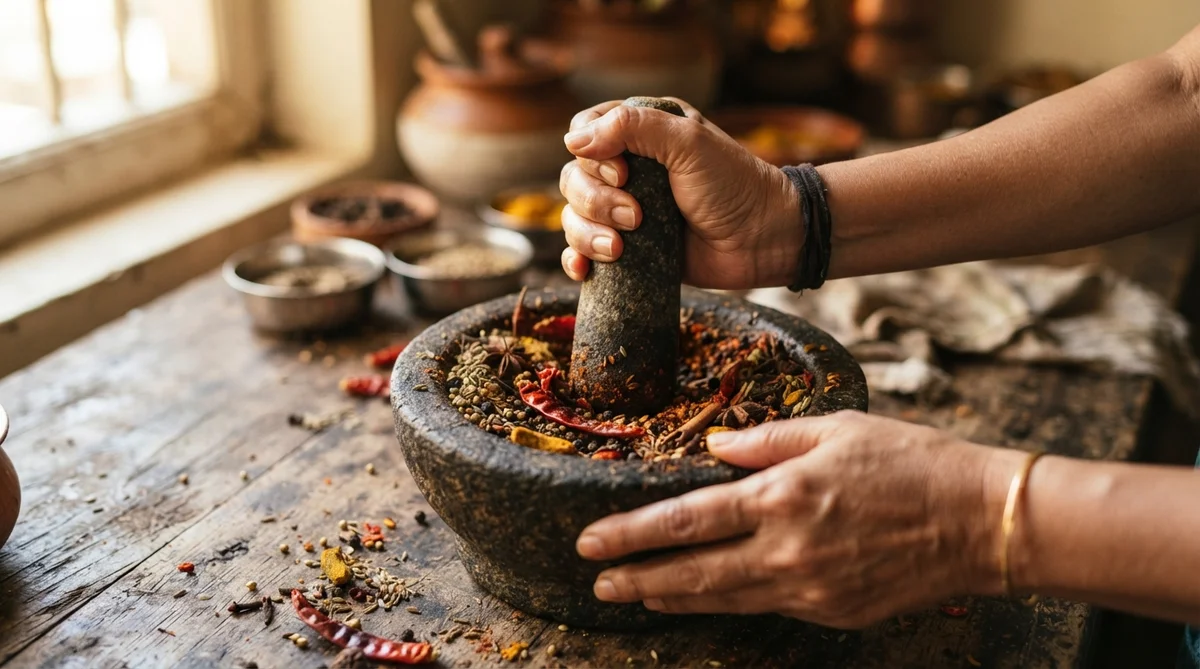
Authentic preparation relies on grinding whole spices after a brief dry-roasting step. Heating whole spices on a dry skillet for 5 to 10 minutes releases essential oils without burning the seeds.
| Spice (Tamil / English) | Flavor Role | Primary Dish Use | Key Attribute |
|---|---|---|---|
| Kalpasi (Black Stone Flower) | Earthy, woody aroma | Chettinad Chicken, Mutton Chukka | Rare lichen yielding deep umami notes |
| Anasipoo (Star Anise) | Sweet, licorice-like aroma | Biryanis, rich meat gravies | Southeast Asian trading import |
| Karu Milagu (Black Peppercorn) | Pungent, sharp heat | Pepper Chicken, Milagu Rasam | Primary heat source over red chili |
| Maratti Mokku (Dried Kapok Bud) | Mustardy, spicy aroma | Vegetable kurmas, meat curries | Fragrant dried flower bud |
| Sombu (Fennel Seed) | Sweet, cooling background | Vegetable pirattal, seafood masalas | Aids digestion and sweetens base |
Households store these spices whole and grind them fresh for every meal. Homemade masalas maintain peak fragrance for up to 4 months when kept in airtight containers.
Traditional Cooking Methods and Utensils
Traditional preparation methods prioritize patience, physical grinding, and controlled thermal retention to extract subtle flavors from whole ingredients.
Stone Grinding (Ammi Kallu)
The ammi kallu is a flat granite grinding stone paired with a heavy cylindrical roller. Kitchen staff crush wet spice pastes, coconut, and garlic manually against the rough stone surface. This crushing motion releases volatile aromatic oils without heating the ingredients, producing a smoother emulsion than high-speed electric blades.
Clay Pot Cooking & Slow Fire
Unglazed earthenware pots, known locally as chatti, are preferred for simmering gravies and fish curries. Clay pots retain heat evenly and neutralize acidic ingredients like tamarind during long cook times. Meat curries simmer slowly over wood fires, allowing spices to penetrate bone marrow and tenderize proteins without drying them out.
Famous Chettinad Dishes You Must Try
The region’s menu features diverse options, ranging from fiery game preparations to delicate rice batters. Diners can explore famous chettinad dishes across distinct non-vegetarian, vegetarian, and sweet categories.
Iconic Non-Vegetarian Delicacies
- Chicken Chettinad: Bone-in chicken cooked in a dark, aromatic gravy made from dry-roasted spices, poppy seeds, and fresh coconut paste.
- Mutton Chukka: Tender chunks of lamb or goat pan-roasted with caramelized shallots, curry leaves, and a heavy dose of crushed black pepper.
- Nandu Masala: Fresh mud crabs simmered in a hot pepper and fennel sauce, allowing sweet crab meat to absorb the pungent spices.
- Kada Fry: Whole quail marinated in red chili paste and ground spices, then shallow-fried until crispy.
Popular Vegetarian Specialties
- Vellai Paniyaram: Crispy, fluffy deep-fried dumplings made from a ground batter of raw rice and white lentils.
- Ennai Kathirakai: Small tender eggplants stuffed with a spicy sesame and peanut paste, slow-cooked in sesame oil.
- Seppankizhangu Varuval: Taro root boiled, peeled, tossed in spicy rice flour masala, and pan-fried until crunchy.
- Kaikari Pirattal: Mixed seasonal vegetables dry-tossed with freshly scraped coconut, mustard seeds, and fennel.
Traditional Chettinad Sweets and Snacks
- Kavuni Arisi: Heirloom Burmese black rice soaked, steamed, and tossed with ghee, sugar, and freshly grated coconut.
- Kandharappam: Golden sweet fritters made from rice, jaggery, lentils, and fresh coconut, lightly spiced with cardamom.
- Ukkarai: A traditional festival sweet crafted from split yellow lentils, jaggery, ghee, and toasted cashews.
The Chettinad Serving Tradition: The Banana Leaf Feast
The traditional meal, or Elai Sappadu, follows a strict layout on a fresh banana leaf. The leaf is placed with the wide tip pointing to the diner’s left, serving as a sterile, biodegradable plate that imparts a subtle herbaceous aroma to hot food.
Servers place small portions of salt, pickles, chutneys, and seasoned vegetables along the top edge of the leaf. Steaming short-grain rice is piled in the center, acting as the foundation for sequential courses of sambar, rasam, and curd gravies.
- Top left placement: Salt, lime pickle, and ginger chutneys to stimulate digestion.
- Top right placement: Dry vegetable stir-fries (poriyal), cooked lentils, and crispy papadams.
- Center placement: Boiled rice, systematically topped with ghee, lentil gravy, tamarind-based kuzhambu, and finally cooling yogurt.
As documented in regional guides by the Michelin Guide, folding the top half of the leaf down toward yourself upon finishing signals satisfaction and respect to the host.