
AT A GLANCE
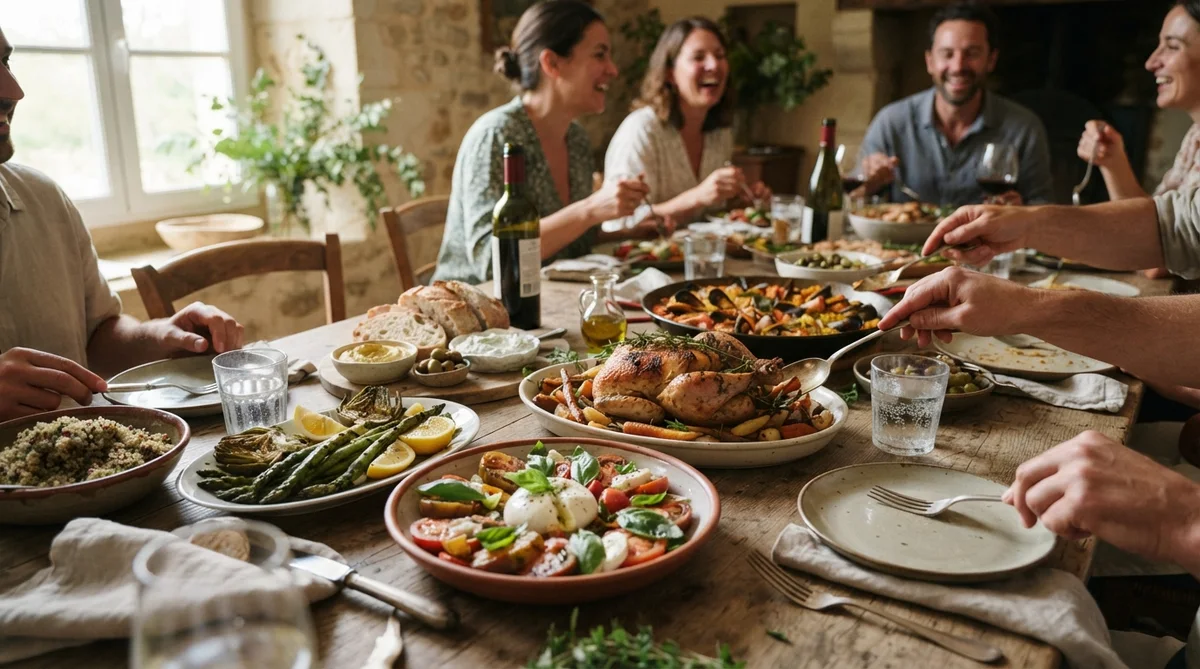
A family meal is a shared meal built around eating together, whether it is a planned dinner at home or a staff meal prepared for a restaurant team. The food can be simple, improvised, culturally specific, or made from ingredients that need using.
- At home, it usually means people eat the same meal at roughly the same time.
- In restaurants, a family meal or staff meal feeds employees before, during, or after service.
- The menu often favours communal dishes such as rice, pasta, soup, stews, roasted vegetables, and salad.
- The purpose is practical as well as social: nourishment, connection, communication, and hospitality.
The meaning changes with the setting, because a family meal at home is a household ritual while a restaurant family meal is part of workplace culture.
What Is a Family Meal?
A family meal is a shared meal where a group eats together rather than ordering separate dishes for each person. At home, the phrase usually describes a regular household meal, often served from shared platters or a central pot. In a restaurant, it means food prepared for employees, commonly called a staff meal.
The restaurant family meal tradition is not usually a formal tasting of the establishment’s signature dishes. Cooks may prepare soup from vegetables that need using, roast chicken with rice, or a large tray of baked pasta. The meal may also give chefs a chance to cook food connected to their own backgrounds, such as Filipino adobo, Mexican arroz rojo, Indian dal, or Korean japchae.
A restaurant family meal is generally served outside the busiest part of service so the team can eat together. Many restaurants provide it without a separate charge as an employment benefit, but timing, eligibility, and payment arrangements differ by workplace. The exact practice should never be assumed from a restaurant’s public menu or social media posts.
The phrase also carries a wider idea: people who work, live, or travel together create a temporary community around food. That is why a family meal can be memorable even when the food is inexpensive. A pot of beans, warm tortillas, and chopped cabbage can feel more generous than a carefully plated dish eaten alone.
What Does a Family Meal Usually Include?
A family meal usually includes food that can be prepared in quantity, held safely, and served without complicated individual plating. The format depends on the cook, budget, dietary needs, and available ingredients.
- A main dish: This might be braised beans, roast chicken, fish curry, lasagna, vegetable stew, or a grain-based dish such as biryani.
- A filling side: Rice, potatoes, bread, noodles, polenta, or tortillas make the meal satisfying and easy to portion.
- Vegetables or salad: A crisp salad, sautéed greens, roasted carrots, or pickled vegetables add colour, texture, and acidity.
- A shared drink or dessert: Water, tea, fruit, yogurt, or a simple cake can complete the meal without requiring restaurant-style service.
In a restaurant, the menu often reflects the day’s prep. Trimmed vegetables can become stock or soup, surplus herbs can go into salsa verde, and cooked grains can be turned into fried rice. Good kitchen management prevents waste, but food safety still comes first: ingredients must be stored, reheated, and served according to local regulations.
There is no required number of courses and no fixed cuisine. A family meal can be vegetarian, halal, kosher, gluten-free, dairy-free, or shaped by whichever cook is on duty. The strongest versions offer enough variety that people with different appetites can assemble a satisfying plate.
Why Are Family Meals Important?
Family meals matter because they create a dependable time for people to eat, talk, and notice one another. Their value is not limited to nutrition. A shared table can establish belonging, pass on food traditions, and make room for conversations that rarely happen during individual snacking.
- They support connection: Eating together gives households and teams a recurring social setting that does not depend on a special occasion.
- They teach food culture: Children and newcomers learn recipes, table manners, seasonal habits, and the stories behind dishes.
- They improve kitchen efficiency: A large shared dish can reduce duplicated work, packaging, and food waste.
- They strengthen restaurant teams: A staff meal gives cooks, servers, dishwashers, managers, and bartenders a chance to eat and communicate as colleagues.
The James Beard Foundation has highlighted communal eating and the people who sustain food culture, from home cooks to professional kitchen teams. That perspective helps explain why the staff meal restaurant industry tradition is more than an employee perk: it can also be a daily expression of care and shared responsibility.
UNESCO’s recognition of the Mediterranean diet as intangible cultural heritage includes communal meals, hospitality, and the knowledge passed through food preparation. The example shows that eating together is not a decorative extra added to cuisine. In many food cultures, the gathering itself is part of what makes the meal meaningful.
Family meals are not automatically harmonious. Schedules, allergies, cultural differences, unequal kitchen labour, and workplace hierarchies can make them uncomfortable. A worthwhile meal allows people to decline food, arrive late when necessary, or eat quietly without treating participation as a test of loyalty.
Who Counts as Family at a Family Meal?
Family can mean relatives, but it can also mean housemates, close friends, neighbours, travellers, or colleagues sharing responsibility for a place. In a restaurant, everyone who helps the operation run may count, including front-of-house staff, kitchen porters, delivery workers, supervisors, and temporary employees.
Inclusion depends less on the label than on the practice. People should know when the meal is happening, have a realistic opportunity to eat, and be offered food that suits their religious, medical, and ethical requirements. A separate plate is not a failure of togetherness when shared ingredients are unsafe or unsuitable.
Power dynamics matter particularly in restaurants. If only senior chefs choose the food, the meal may reinforce hierarchy rather than build community. Asking the team what they eat, rotating cooking responsibilities, and keeping portions available for late workers can make a family meal more equitable.
How to Plan a Family Meal
Plan a family meal around a flexible centrepiece, clear dietary information, and a serving method that keeps the cook from being trapped in the kitchen. The best plan leaves enough time for people to sit down while the food is still appealing.
Choosing the Menu
Choose one substantial dish that scales well, then add sides with different textures and levels of freshness. A pot of coconut chickpea curry, steamed rice, cucumber salad, and flatbread is easier to coordinate than several dishes that all require last-minute frying or individual plating.
Ask about allergies and dietary restrictions before shopping or cooking. Do not treat an allergy as a preference, and do not assume that a vegetarian dish is safe if it shares stock, cooking oil, or utensils with meat.
- Start with the season: Use tomatoes and corn in summer, squash and greens in cooler months, or preserved foods such as beans, pickles, and tinned fish year-round.
- Balance the plate: Pair a rich braise or creamy dish with something acidic, crisp, or herbaceous.
- Make portions adjustable: Serve sauces, chilli, grated cheese, herbs, and dressings separately when tastes vary.
- Protect the timing: Finish one or two components ahead so the meal does not depend on every person arriving at the same minute.
For a restaurant team, use a menu that can be held safely and eaten quickly without sacrificing nourishment. Stews, grain bowls, frittatas, soups, sandwiches, and composed salads work well, while fragile fried foods and heavily customised plates are harder to serve to a changing shift.
Making Mealtime Easier and More Inclusive
Set the table before cooking ends, label dishes when ingredients may be unclear, and put serving utensils with every shared bowl. These small steps prevent repeated questions and let people begin eating without waiting for one person to portion every plate.
Keep a vegetarian or plant-based main dish substantial rather than treating it as a garnish. Lentil kofta, mushroom stroganoff, tofu mapo, or white-bean cassoulet can feed a group with the same generosity as a meat-based centrepiece.
At home, avoid making conversation the price of admission. Some people connect through cooking or washing up, while others need a quiet meal after work. At a restaurant, staggered seating may be necessary when service continues, but every worker should have access to a proper break and enough food.
Restaurant schedules, menus, staffing policies, and family-meal arrangements change frequently. If you are visiting a named venue or asking about its staff-meal practice, confirm details directly before relying on them.
Family Meals at Restaurants
At restaurants, a family meal is an internal staff meal rather than a dish normally available to customers. The kitchen usually prepares a large batch, serves it to the team, and clears the meal before or during a planned service break.
The food can reveal a restaurant’s working culture more clearly than its dining-room menu. A chef may make food from home, a junior cook may test a new seasoning combination, or the team may rely on a practical dish such as chili, rice and beans, or pasta with vegetables. The meal is often informal, but it still depends on planning, purchasing, and safe handling.
Family meal also has a place in restaurant storytelling. Books such as The Family Meal: Home Cooking with Ferran Adrià present professional kitchen ideas through accessible home cooking, while accounts of staff meals from restaurants show how cooks use shared food to build camaraderie. Those books are snapshots of particular kitchens, not proof that every restaurant follows the same routine.
For diners, seeing the term on a menu or hearing it from a server can be confusing. A restaurant may use family meal to describe a staff benefit, a communal event, or a set of dishes intended for a group of guests. Ask what the phrase means at that venue, and confirm current menu details, serving times, prices, and dietary options before making plans.
Family Meal vs. Family-Style Dining
A family meal is usually food shared by a household or restaurant staff, while family-style dining is a service format offered to paying guests. The two ideas overlap because both use communal serving, but their purpose and audience are different.
| Feature | Family meal | Family-style dining |
|---|---|---|
| Who eats? | Household members, friends, or restaurant employees | Paying diners, usually at one table |
| Purpose | Nourishment, connection, and team or household routine | A shared restaurant experience with table service |
| How food is served | Often from a central pot, tray, or bowl | Usually platters or bowls brought to the table |
| Menu | Flexible, improvised, or based on available ingredients | Chosen from a restaurant’s set or regular menu |
| Payment | Often included at home or provided to staff, depending on policy | Paid for by guests under the restaurant’s current terms |
For example, a restaurant might serve a family-style Korean meal with banchan, grilled meat, rice, and stews to customers, while its employees eat a separate staff meal of leftovers, soup, and rice before service. One is a guest-facing format; the other is an internal communal meal.
If you want the feeling of a family meal when dining out, look for menus designed for sharing, communal tables, and dishes that arrive in serving bowls rather than individually plated courses. Confirm portion sizes, minimum group requirements, current prices, and allergy procedures with the restaurant because these details can change.