
THE ESSENTIALS
Menu engineering psychology is a data-driven strategy that blends consumer behavior with precise costing to guide diners toward a restaurant’s most profitable dishes.
- Menus designed with strategic layout principles can increase overall restaurant profits by 10% to 15%.
- Most diners spend less than 120 seconds scanning a menu, making instant visual hierarchy crucial.
- Removing currency symbols and using charm pricing can boost specific item sales by up to 24%.
While layouts vary, specific menu offerings and pricing details at any individual restaurant change frequently and should always be confirmed before you go.
What Is Menu Engineering Psychology?
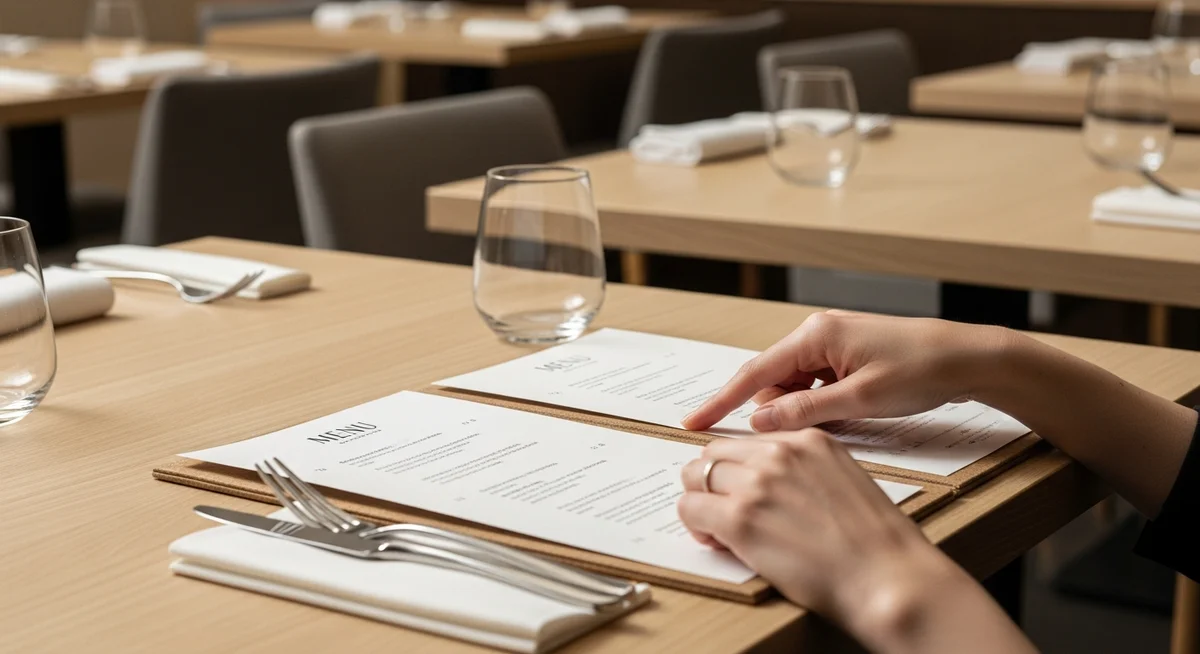
When you sit down at a bistro, your eyes naturally gravitate to certain areas of the page. This is not accidental. Menu engineering psychology is the study of how menu design, wording, and layout influence guest purchasing behavior.
If you have ever wondered how menus manipulate you, the secret lies in cognitive science. By understanding how the human brain processes information under pressure, operators organize options to reduce decision fatigue. This science relies heavily on restaurant menu pricing tricks that make premium choices feel like sensible selections.
According to research published by the WebstaurantStore, most guests review a menu for less than two minutes. In that brief window, visual cues like color, typography, and negative space do the heavy lifting. The goal is to maximize the profitability of every seat without compromising the dining experience.
The Myth of the “Magic” Menu: Why Psychology Cannot Overcome Bad Unit Economics
A common mistake among new restaurateurs is assuming that clever formatting can rescue a failing business. You cannot decorate your way out of poor food costing or high waste. If a dish costs 35% more to produce than its ideal food cost percentage, placing it in a golden frame will only accelerate your losses.
Genuine menu engineering starts in the back office with spreadsheets, not in a design studio. Every single ingredient, from the pinch of Maldon sea salt to the portioned wagyu ribeye, must be costed down to the penny. As the editors at Serious Eats frequently emphasize in their culinary guides, understanding yield and waste is the foundation of any successful kitchen operation.
Only when you know the exact contribution margin of each item can you apply behavioral science. A beautiful layout highlighting a low-margin dish simply encourages guests to buy the wrong thing faster. Psychology acts as an amplifier for strong unit economics, never a substitute for them.
The Menu Matrix: How Restaurants Classify Dishes
To begin engineering your menu, you must categorize every dish using a classic business tool called the menu matrix. This framework plots items along two axes: popularity (the volume sold over a 60 to 90 day window) and profitability (the individual contribution margin). Once plotted, your entire menu divides into four distinct quadrants.
The following matrix outlines how these quadrants are defined and the strategic action required for each:
| Quadrant | Popularity | Profitability | Strategic Action |
|---|---|---|---|
| Stars | High | High | Promote and protect |
| Plowhorses | High | Low | Adjust pricing or portions |
| Puzzles | Low | High | Increase visibility or rename |
| Dogs | Low | Low | Re-evaluate or remove |
Stars: High Popularity, High Profitability
These are your champion dishes, the ones that guests love and that bring in high margins. A prime example is a signature pasta dish made with house-extruded dough and a slow-simmered bolognese sauce. The raw ingredients are relatively inexpensive, but the culinary execution justifies a premium price.
You should keep these items highly visible and completely consistent. Do not alter the recipe or dramatically change the price, as they are the backbone of your brand. Keep them in prime real estate zones to maintain their steady sales.
Plowhorses: High Popularity, Low Profitability
Plowhorses are crowd-pleasers that do not make much money. A classic hand-cut ribeye steak often falls into this category because wholesale beef prices are exceptionally high. Guests expect to see it, and they order it frequently, but your profit margin is thin.
The goal here is to gently shift these items toward profitability without alienating your regulars. You might decrease the portion size slightly, pair them with high-margin side dishes, or raise the price incrementally. Alternatively, you can seek out cheaper, high-quality cuts of meat, like flat irons, that offer better yield.
Puzzles: Low Popularity, High Profitability
Puzzles are highly profitable dishes that simply do not sell well. This might be an inventive octopus carpaccio or a specialized vegetarian entrée that diners overlook. They have excellent margins, but they lack the appeal to command high volume.
To solve a puzzle, you must identify why it is not selling. Is the name too intimidating, or is it hidden at the bottom of the page? Sometimes a simple name change, a descriptive rewrite, or moving the item to the top of its section is all it takes to spark interest.
Dogs: Low Popularity, Low Profitability
Dogs are the underperformers of your menu, taking up space without contributing to your bottom line. An example might be an over-complicated seafood salad that requires expensive, highly perishable ingredients and rarely gets ordered. These items drain labor, increase waste, and clutter your kitchen prep line.
The most straightforward solution is to remove them entirely from your offerings. If a dish is a traditional favorite but still performs poorly, you can try to reinvent it as a weekend special. Otherwise, replace it with a new option that has better market appeal and stronger margins.
The 4-Step Menu Engineering Process
Applying menu engineering psychology to your restaurant is a methodical, ongoing process. You cannot treat it as a one-time design project. To achieve lasting success and boost profits, operators should follow these four essential steps:
- Cost every menu item: Calculate the exact cost of every ingredient in every dish, down to the penny. This must be updated regularly to reflect fluctuating wholesale ingredient prices.
- Categorize into the matrix: Track your sales data over a 60 to 90 day period using your point-of-sale system, then place each dish into its respective quadrant.
- Redesign the physical layout: Position your Star and Puzzle dishes in high-visibility areas like the Golden Triangle. Apply proven restaurant menu pricing tricks, such as omitting currency symbols and using negative space to draw the eye.
- Train your staff to sell: Share the matrix results with your front-of-house team. Ensure they know exactly which Puzzle and Star dishes to recommend when guests ask for suggestions.
Once you complete these steps, wait another 60 days before pulling the sales data again. You will quickly see how small, calculated adjustments in layout and description can dramatically alter customer ordering habits. In the competitive dining landscape of 2026, these subtle shifts are often what separates a thriving establishment from one that is barely scraping by.