
WHAT YOU NEED TO KNOW
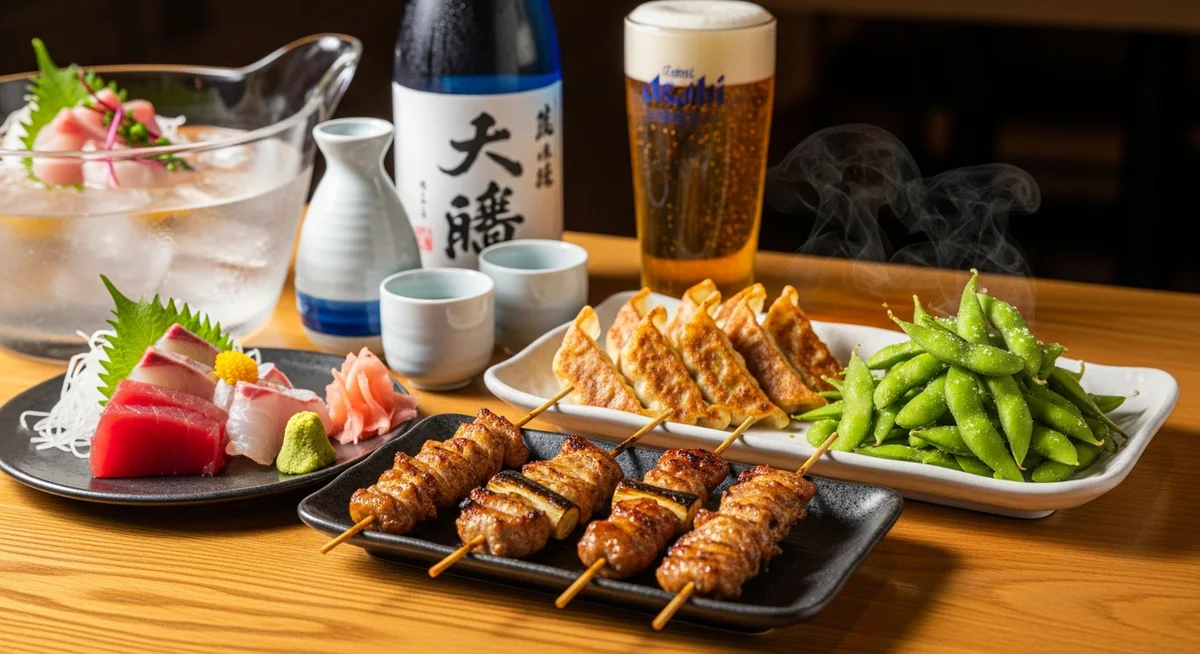
At its core, understanding what izakaya dining is all about means embracing a relaxed, multi-course sharing style where drinks and savory plates flow continuously in a casual Japanese pub setting.
- Informal and Social: Originating in the Edo period as standing sake shops, modern izakayas are vibrant spaces designed for socializing over shared plates rather than formal dining.
- The Otoshi System: Almost every izakaya serves a small, mandatory starter called otoshi, which functions as a table cover charge of 300 to 500 yen per person.
- Round-by-Round Ordering: Dining is structured around ordering drinks first, followed by quick cold starters, then hot grilled or fried items, and finishing with a comforting starch dish.
Your overall experience will depend on whether you choose a lively standing bar or a modern chain, so always verify the venue style before walking in.
What is an Izakaya?
What is an izakaya? An izakaya is a casual Japanese establishment that serves alcoholic drinks alongside a wide array of small, savory dishes. The name translates literally to “stay sake shop,” which perfectly describes the inviting, unpretentious atmosphere. Unlike a Western bar where drinking is the sole focus, or a restaurant where you eat a single large entree, this venue balances food and drink in equal measure.
When you step inside, you are usually greeted with a loud, energetic shout of “Iirrashaimase” from the staff. You will find a variety of seating styles, from western-style tables and stools at a wooden bar to traditional low tables set on woven tatami mats. The interior is often warm and cozy, featuring dark wood, handwritten menu strips hanging from the walls, and soft lighting.
A Brief History of the Japanese Pub
The roots of these establishments stretch back several centuries into Japan’s history. According to a historical overview published by Wikipedia, early prototypes of drinking taverns existed in Japan as far back as the early 700s, where rice was collected as a brewing tax. However, the true precursor to the modern izakaya flourished during the Edo period, which lasted from 1603 to 1867.
During this era, sake shops began allowing customers to drink on the premises while standing. To keep customers drinking, shop owners started offering simple, inexpensive snacks called sakana, often using upturned sake barrels as makeshift stools. Over time, these temporary setups evolved into permanent eating and drinking houses that welcomed workers at the end of their day.
What Izakaya Dining Is All About: How It Works
To fully enjoy your evening, you must understand how the dining flow differs from standard restaurants. The experience is intentionally slow and interactive, designed to stretch over several hours with continuous ordering. You do not order your entire meal at once, but rather let it unfold organically as the night progresses.
The “Otoshi” (Table Charge & Starter)
As soon as you are seated, your server will present you with a wet towel (oshibori) and a tiny, unsolicited appetizer called an otoshi. This dish might be a small bowl of potato salad, simmered beef, pickled vegetables, or seasoned seaweed. This is not a complimentary gift, but rather a mandatory table charge that typically costs between 300 and 800 yen per person.
This customary practice serves as the establishment’s cover charge and helps support the business. While it can occasionally surprise international visitors who see unexpected charges on their final bill, it is a deeply ingrained part of Japanese hospitality.
Ordering Etiquette: Sharing and Ordering in Rounds
The cardinal rule of this dining style is that every dish is meant to be shared by the entire table. Plates are placed in the center of the table, and guests use their chopsticks to take small portions. To keep the meal fresh and engaging, you should order your food in successive rounds rather than all at once.
A typical session begins with ordering a drink, usually a cold draft beer, immediately upon sitting. While sipping your first drink, you can browse the menu and order a few quick cold starters. As those plates are cleared, you can move on to ordering grilled skewers, deep-fried items, and finally a starch dish to end the night. If you want to understand how we research these distinct dining styles across different cultures, you can read about how do restaurant, world cuisine and food travel guides work on our platform.
Must-Try Izakaya Food
The menu at a typical izakaya is incredibly diverse, spanning raw fish, grilled meats, fried delicacies, and simmered comfort foods. Because the dishes are small and affordable, you have the freedom to experiment with multiple flavors throughout the evening.
Otsumami (Quick Starters)
Otsumami refers to the quick, simple snacks designed to pair perfectly with your first round of drinks. These dishes require almost no cooking time and are served almost immediately after ordering.
- Edamame: Fresh green soybean pods boiled in salted water and served hot or cold.
- Hiyayakko: A block of chilled silken tofu topped with grated ginger, chopped green onions, and shaved bonito flakes.
- Tsukemono: A colorful assortment of Japanese pickled vegetables that offer a tart, crunchy palate cleanser.
- Goma-ae: Blanched green vegetables, typically spinach, tossed in a sweet and savory ground sesame dressing.
Skewers and Grilled Dishes (Yakitori & Yaki Sakana)
The smoky aroma of charcoal grilling is a signature characteristic of many traditional drinking dens. Chefs often work behind a glass screen, turning skewers over hot binchotan charcoal.
- Yakitori: Skewered chicken pieces glazed with a sweet soy-based sauce (tare) or seasoned simply with coarse sea salt (shio).
- Kushiyaki: A broader category of grilled skewers that includes pork belly, beef, cherry tomatoes wrapped in bacon, and shiitake mushrooms.
- Yaki Sakana: Grilled whole or filleted fish, such as mackerel (saba) or atka mackerel (hokke), prized for their crispy skin and rich, oily meat. Culinary experts at Serious Eats highlight these grilled fish dishes as the ultimate pairing for dry sake due to their rich, smoky oils.
Deep-Fried Favorites (Karaage & Tempura)
Crispy, hot, and highly satisfying fried foods are staple orders that help balance the alcohol you consume.
- Chicken Karaage: Bite-sized pieces of chicken thigh marinated in soy sauce, ginger, and garlic, lightly coated in potato starch and deep-fried to a golden crisp.
- Agedashi Tofu: Cubes of firm tofu coated in starch, deep-fried until a delicate skin forms, and served hot in a pool of savory dashi broth.
- Tebasaki: Crispy fried chicken wings glazed in a sweet and peppery sauce, a specialty originally from Nagoya but loved nationwide.
Finishing the Meal with “Shime” (Rice and Noodles)
In Japanese food culture, people traditionally do not eat rice or noodles while actively drinking alcohol because sake, brewed from rice, occupies that role. Instead, the final course of the evening consists of a comforting, carb-heavy dish known as shime to fill you up before heading home.
- Ochazuke: A soothing bowl of steamed rice partially submerged in hot green tea, dashi broth, or oolong tea, topped with salted salmon, plum, or seaweed.
- Yakisoba: Stir-fried noodles tossed with sliced pork, cabbage, and a thick, savory Worcestershire-style sauce.
- Yaki Onigiri: Grilled rice balls brushed with soy sauce or miso paste until they develop a crunchy, caramelized outer crust.
Popular Izakaya Drinks
While the food is excellent, these establishments are fundamentally drinking spaces, meaning the beverage menu is extensive and central to the experience.
Japanese Beer and Highballs
Almost every dining session begins with a cold draft beer, commonly referred to as nama-biiru. Major domestic brands like Asahi, Kirin, and Sapporo dominate the taps, offering crisp, clean lagers that refresh the palate.
If you want something lighter, the whisky highball is an incredibly popular choice. Made with Japanese whisky, ice, and highly carbonated soda water, it is served in a frosty mug. The effervescence and sharp acidity of the highball make it excellent for cutting through the richness of deep-fried chicken or grilled pork belly.
Sake, Shochu, and Sour Cocktails
For those looking to explore traditional Japanese spirits, the options are varied and highly customizable.
- Sake (Nihonshu): Brewed rice wine that can be ordered hot (atsukan) in winter or chilled (reishu) in summer, served in small ceramic carafes called tokkuri.
- Shochu: A distilled spirit made from sweet potatoes, barley, or rice, which has a higher alcohol content than sake and can be served on the rocks or mixed with warm water.
- Chuhai and Sours: Refreshing cocktails made by mixing shochu with carbonated water and fruit juice, with the fresh lemon sour and yuzu sour being absolute crowd favorites.
Tips for Finding and Choosing an Izakaya
When searching for a place to eat in Japan, look for the traditional red paper lanterns, known as akachochin, hanging outside the doorway. These lanterns historically signaled a welcoming, budget-friendly pub for weary workers. Today, they remain a reliable indicator of an authentic, non-chain establishment.
If you do not speak Japanese, look for venues that display picture menus or tablets at the table for digital ordering, which has become standard across many metropolitan areas. Additionally, keep in mind that smaller, traditional pubs are often exempt from national indoor smoking bans, so you may encounter smoking environments. Finally, please remember that menus, pricing, and operating hours can change frequently, so it is always wise to double-check details directly with the venue before visiting.