
WHAT YOU NEED TO KNOW
An introduction to Mexican street food reveals that these quick, fresh dishes, known locally as antojitos, offer some of the most complex and culturally rich dining experiences on the planet.
- UNESCO inscribed traditional Mexican cuisine on its Representative List of the Intangible Cultural Heritage of Humanity, highlighting its ancient agricultural and cooking techniques.
- Corn remains the absolute baseline of this street food scene, with over 59 native varieties of heirloom maize cultivated throughout the country.
- While Mexico City boasts tens of thousands of street stalls, regional styles divide the nation into at least seven distinct culinary zones.
Your culinary experience will vary based on geography, as Northern wheat-based flour tortillas yield to Southern corn-centric heirloom maize traditions.
An Introduction to Mexican Street Food: What Is an Antojito?
An introduction to Mexican street food starts with understanding the word “antojitos,” which translates literally to “little cravings.” These are not merely snacks to tide you over between larger meals. For millions of locals, these fast, fresh, and deeply traditional dishes make up the core of daily eating.
Whether you stand beside a metal cart on a busy street corner or pull up a plastic stool in a bustling neighborhood market, the experience is highly sensory. You will hear the rhythmic patting of fresh masa dough and smell the rich aroma of slow-cooked meats. Salsas are prepared daily, offering a bright, fresh contrast to rich proteins.
This culinary culture thrives because it is accessible, fast, and intensely flavorful. The dishes are designed to be eaten by hand, making them the ultimate convenience food. From dawn until long after midnight, these stalls serve as the social and culinary heartbeat of Mexican communities.
The History and Origins of Antojitos
Pre-Hispanic and Aztec Roots
The foundations of Mexican street food date back thousands of years before European contact. Indigenous civilizations, including the Aztecs and Mayans, cultivated the holy trinity of Mesoamerican agriculture: corn, beans, and chilies. These ingredients still form the bedrock of the cuisine today.
Ancient cooking methods like nixtamalization, where corn is soaked and cooked in an alkaline solution, unlocked essential nutrients and made the corn grindable into masa. In massive pre-Hispanic markets like Tlatelolco, vendors sold steamed tamales filled with wild game, roasted insects, and native fruits. These ancient meals were the direct ancestors of the street food we eat today.
Spanish Colonial Influences
The Spanish conquest in the 16th century introduced entirely new animal proteins, dairy products, and cooking fats to the region. The introduction of pork, beef, chicken, lard, and cheese fundamentally transformed indigenous food preparations. Tortillas, once used purely as edible plates, were fried in lard and stuffed with roasted meats, creating the early templates for modern tacos.
Over the centuries, other global migrations left their mark on the streets of Mexico. Lebanese immigrants arriving in the late 19th and early 20th centuries brought vertical spit-roasting techniques. This technique was adapted to pork marinated in local chilies and spices, giving birth to the legendary tacos al pastor.
Core Ingredients in Mexican Street Food
- Masa: This nixtamalized corn dough is the starting point for tortillas, tamales, sopes, and gorditas.
- Chilies: Fresh varieties like serrano and jalapeño offer bright heat, while dried chilies like ancho, guajillo, and chipotle provide deep, smoky complexity to salsas and marinades.
- Limes: A wedge of fresh lime is served with nearly every plate, providing the essential acid to balance rich, fatty meats.
- Cheese: Stringy Oaxaca cheese provides perfect meltability, while salty, dry Cotija is crumbled over street corn and beans.
- Aromatics: Finely chopped raw white onions and fresh cilantro are the universal garnish for street tacos.
Must-Try Savory Street Foods
Tacos
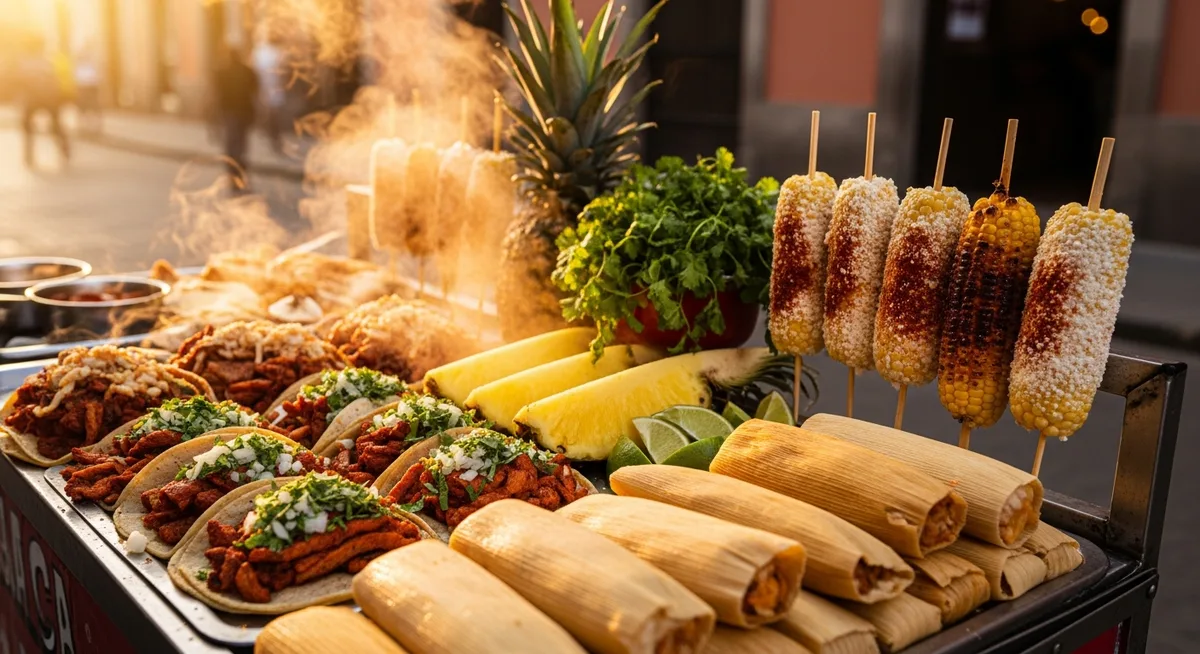
Tacos are the undisputed crown jewel of the street food scene. Slicing through the endless varieties can be intimidating, but starting with tacos al pastor is essential. The spit-roasted pork is shaved directly into a double layer of warm corn tortillas and topped with a slice of fresh pineapple. I love the contrast of the sweet fruit against the savory, spiced pork.
For a richer experience, seek out carnitas, which is pork slow-cooked in lard until tender on the inside and crispy on the edges. According to culinary experts at Serious Eats, the key to a great taco lies in the quality of its salsa, which must balance heat, acidity, and salt. Always verify local vendor schedules before you plan your trip, as popular stands frequently adjust their operating hours.
Tamales
Tamales are a beloved breakfast staple, often purchased from steam pots strapped to the backs of tricycles. They consist of seasoned masa spread onto corn husks or banana leaves, filled with meats, cheese, or chilies, and then steamed. The resulting pocket of corn dough is light, fluffy, and incredibly filling.
Tortas
When you need something more substantial than a taco, the torta is the ultimate street sandwich. Built on crusty bolillo or telera bread rolls, they are typically smeared with refried beans and mayonnaise. From there, they are loaded with meats, avocado slices, tomatoes, and pickled jalapeños before being toasted on a flat-top grill.
Quesadillas, Gorditas, and Sopes
Masa is incredibly versatile, yielding several distinct street food shapes. Traditional street quesadillas are made from raw masa folded over fillings and cooked on a griddle, often containing squash blossoms or huitlacoche rather than just cheese. Gorditas are thick masa cakes split open and stuffed with ingredients, while sopes are flat, thick discs with pinched edges that act as edible bowls for beans and meat.
Elotes and Esquites
Street corn is a wildly popular late-afternoon snack. Elotes feature whole grilled corn on the cob slathered in mayonnaise, rolled in crumbled cotija cheese, and dusted with chili powder. Esquites offer the exact same flavors but with the sweet corn kernels cut off the cob and served warm in a cup with a spoon.
Birria and Consomé
Hailing from the state of Jalisco, birria is a deeply spiced meat stew traditionally made from goat or beef. Street stalls serve the tender, shredded meat inside tacos that are often dipped in lard and pan-fried. A small cup of the rich, aromatic broth, or consomé, is served on the side for dipping.
Sweet Street Treats & Snacks
Churros and Marquesitas
For a sweet finish, look for vendors frying long curls of churros, dusting them in cinnamon sugar while they are still piping hot. If you find yourself in the Yucatán region, marquesitas are a mandatory treat. These thin, crispy crepes are rolled up on a hot iron and filled with sweet caramel sauce and grated, salty Edam cheese.
Paletas and Raspados
To beat the heat, street carts offer paletas, which are ice pops made from fresh seasonal fruit, water, or milk. You will also find raspados, the Mexican version of shaved ice. These are sweetened with natural fruit syrups like mango, tamarind, and guava, rather than artificial flavorings.
Traditional Street Beverages
No street food meal is complete without a refreshing beverage to balance the heat and spices. Aguas frescas, meaning “fresh waters,” are light, non-alcoholic drinks made from fruits, grains, or flowers blended with water and sugar. The most popular varieties include horchata, a creamy drink made from rice milk and cinnamon, and jamaica, a tart, refreshing infusion of dried hibiscus flowers.
For those looking for an alcoholic option in the evening, micheladas are a popular street-adjacent choice. This beverage combines cold Mexican beer with fresh lime juice, assorted savory sauces, and chili-salt around the rim. It is a savory, spicy, and incredibly refreshing accompaniment to a plate of rich street tacos.
Regional Variations of Mexican Street Food
- The North: Flour tortillas reign supreme here, serving as the wrapper for high-quality grilled beef like carne asada.
- The Pacific Coast: In Baja California, street stalls specialize in crispy, beer-battered fish tacos topped with cabbage and creamy sauces.
- Central Mexico: Mexico City and Puebla are the epicenters of complex corn-based antojitos, deep-fried treats, and diverse tacos.
- The South: Oaxaca is famous for tlayudas, which are large, crispy tortillas topped with black beans, cheese, pork, and avocado.
- Yucatán Peninsula: Local street food features Mayan-influenced flavors, slow-roasted pork marinated in sour orange and achiote, and citrusy pickled onions.
How to Order From a Mexican Street Food Stall
Ordering street food can feel intimidating to first-timers, but the process is highly standardized. At most stalls, you simply walk up, place your order directly with the cook, and eat your food while standing or sitting on a plastic stool. In many traditional stalls, you do not pay when you order; instead, you keep track of what you ate and pay the vendor at the very end.
This honor system relies on mutual trust, so be honest about how many tacos you consumed. If you are exploring how global food travel guides work, you will find that understanding these local payment customs is key to a smooth dining experience. Always keep plenty of small-denomination cash on hand, as street vendors rarely have change for large bills.
Essential Etiquette and Safety Tips
To ensure a safe and delicious experience, look for stalls with long lines of local families, which indicates high food turnover and fresh ingredients. Let your stomach acclimate to the local water and spices for a couple of days before adding heavy amounts of fresh salsas. When you find a great vendor, a small tip of a few extra pesos is always appreciated, though not strictly required.