
WHAT YOU NEED TO KNOW
Southern American cuisine is a foundational North American food culture shaped by Indigenous agricultural wisdom, West African culinary mastery, and European food preservation techniques.
- Built upon native staples cultivated over 3,000 years, including maize, beans, squash, and wild game.
- Enriched by West African ingredients brought through transatlantic trade, such as okra, black-eyed peas, sesame seeds, and rice cultivation techniques.
- Encompasses 4 primary subregions: Lowcountry, Appalachian, Cajun and Creole, and regional barbecue belts.
Restaurant recipes and seasonal availability shift frequently across regions, so confirm specific menu items directly with venues before planning a food trip.
History and Origins of Southern American Cuisine
- Indigenous farming practices established foundational crops like maize and squash thousands of years prior to European settlement.
- West African culinary skill introduced specialized farming techniques, deep-frying, and bold spice profiles to plantation kitchens.
- European preserving traditions introduced salt-curing pork, sugar refining, and wheat flour milling to early regional kitchens.
- Post-Civil War economic shifts birthed both resource-driven home cooking and the commercial emergence of soul food.
Indigenous and West African Influences
Native tribes including the Cherokee, Choctaw, and Chickasaw cultivated maize, beans, and squash, historically recognized as the Three Sisters. They developed hickory nut milk, nixtamalized corn hominy, and pit-roasting techniques over hickory coals. These methods provided early European settlers with essential survival skills and culinary building blocks.
Enslaved West Africans introduced vital ingredients including okra, black-eyed peas, sorghum, sesame seeds, and deep-frying techniques. In coastal river basins, enslaved West African laborers leveraged their extensive knowledge of wet-rice farming to build the region’s lucrative rice economy. Their skill transformed plain grains into complex, highly seasoned rice dishes that endure across coastal communities.
Colonial, Antebellum, and Civil War Eras
European settlers introduced pigs, cattle, wheat flour, dairy products, and sugar to the regional landscape. They adapted British and Scotch-Irish preservation habits like salt-curing, smoking, and lard rendering to survive hot southern summers. Smoked pork quickly became the primary seasoning engine for vegetables and stews.
During the Antebellum period, plantation kitchens relied heavily on enslaved cooks who refined complex spice profiles and slow-cooked pot liquors. The economic devastation of the Civil War forced severe food shortages across the region. This hardship solidified a widespread reliance on hardy staples like coarse cornmeal, field peas, and preserved salt pork.
Post-Antebellum Evolution and Soul Food
Following emancipation, sharecropping dictated strict financial resourcefulness across rural farmsteads. Home cooks elevated inexpensive cuts of meat, wild greens, and field legumes into deeply flavorful daily meals through long, patient simmering. Pickling, canning, and root cellar storage ensured vegetable access through winter months.
During the Great Migration, millions of Black Southerners moved to northern and western urban centers, bringing cherished family recipes with them. This geographic expansion gave rise to the commercial identity known as soul food. According to historical research documented by the James Beard Foundation, soul food represents the historic heart of Black Southern foodways, celebrating resilience and heritage through seasoned slow-cooked greens, fried meats, and hand-molded corn breads.
Regional Variations in Southern Cooking
- Creole cooking relies on butter rouxs and complex urban sauces, whereas Cajun food uses lard-based rouxs and dark river seasonings.
- Lowcountry cooking revolves around Carolina Gold rice, Atlantic seafood, and historic Gullah Geechee traditions.
- Appalachian foodways emphasize salt preservation, pickling, wild foraging, and hearth baking in isolated mountain valleys.
- Texas and border regions blend smokehouse meats with Mexican chili peppers, forming historic overlaps with authentic Tex-Mex food traditions.
Louisiana Creole and Cajun Cuisine
Louisiana Creole food emerged in New Orleans as an urban fusion of French, Spanish, West African, and Native American foodways. It relies heavily on butter rouxs, ripe tomatoes, and smooth sauces like remoulade and velouté. Fresh Gulf seafood and imported spices define its refined metropolitan character.
Cajun cuisine developed in the rural bayous of Acadiana from French-Canadian refugees who adapted to swampy terrain. Cajun cooks rely on dark lard-based rouxs, pork sausage like andouille, crawfish, and fresh cayenne pepper without tomatoes. It remains a rustic, heavy, one-pot style of cooking designed to feed working families.
Lowcountry Cuisine
Stretching along the coastal strip of South Carolina and Georgia, Lowcountry cuisine revolves around marshlands, sea islands, and tidal rivers. It emphasizes Carolina Gold rice, Atlantic blue crab, oysters, and white shrimp. The Gullah Geechee culture preserved African foodways here, weaving rice, seafood, and vegetables into iconic regional plates.
She-crab soup, Charleston red rice, and crab rice highlight the delicate seafood flavors of the coastline. Cooking methods favor quick steaming, light simmering, and searing over high heat rather than heavy frying. Fresh herbs and sweet onions balance the natural salinity of coastal catches.
Appalachian Mountain Cuisine
Appalachian foodways reflect the isolated mountain hollows settled primarily by English, Welsh, and Scotch-Irish immigrants. Extreme geography required self-reliance, centering cooking around food preservation like drying, pickling, salting, and fermenting. Root cellars kept apples, potatoes, and winter squash viable through freezing mountain months.
Staples include leather britches (string beans dried on twine and boiled with pork), sorghum syrup, wild ramps, buckwheat cakes, and salt-rising bread. Pork fat and cornmeal form the base of daily meals. Fermented chow-chow relish adds acidity to slow-cooked pinto beans and heavy skillet breads.
Iconic Southern Main Dishes
Main dishes in Southern cooking prioritize slow cooking techniques, wood smoking, and heavy cast-iron searing. The table below outlines key traditional main courses across the region.
| Dish Name | Primary Protein / Base | Cooking Method | Key Flavor Profile |
|---|---|---|---|
| Pulled Pork Barbecue | Pork shoulder or whole hog | Low-and-slow wood smoking | Smoky, tangy, vinegar or mustard spice |
| Southern Fried Chicken | Bone-in chicken cuts | Buttermilk marinade, pan-frying | Crispy, savory, seasoned black pepper |
| Country Ham & Red-Eye Gravy | Salt-cured pork ham | Pan-searing with coffee deglaze | Salty, rich, deep umami notes |
| Smoked Pork Ribs | Pork spare or baby back ribs | Slow smoking over hickory wood | Savory dry rub or sweet molasses glaze |
Southern Barbecue
Southern barbecue centers on low-and-slow smoking of meat over native woods like hickory, oak, and pecan. Regional barbecue divides into sharp styles across state lines. Eastern North Carolina uses whole hog served with vinegar-pepper sauce, while western North Carolina prefers pork shoulder dressed in sweet tomato sauce.
South Carolina is famous for its yellow mustard-based sauce, while Memphis focuses on dry-rubbed ribs smoked in pit barbecue houses. Muscle fibers break down over 12 to 16 hours of indirect heating, producing moist meat with a dark, seasoned outer crust known as bark.
Fried Chicken
Traditional fried chicken requires soaking chicken pieces in seasoned buttermilk for several hours to tenderize the meat. The chicken is dredged in soft wheat flour seasoned with salt, black pepper, and paprika before hitting the hot pan. Cast-iron pan frying in lard or high-smoke oil yields a craggy, golden crust.
The technique fuses Scottish deep-fat frying habits with West African poultry seasoning traditions. Modern variations range from classic mild skillet fried chicken to Nashville hot chicken, which is brushed with a fiery lard and cayenne paste immediately after frying.
Pork, Ham, and Red-Eye Gravy
Country ham undergoes a rigorous process of curing in salt, brown sugar, and pepper for months before hickory smoking and aging. The resulting meat is intensely salty, firm, and rich in natural umami. Sliced thin and pan-seared, it forms the center of traditional breakfast tables.
Red-eye gravy is created by deglazing pan drippings from seared country ham with black brewed coffee. Pouring this thin, dark, salty sauce over warm buttermilk biscuits yields a classic morning meal across the rural South.
Essential Southern Seafood Dishes
Shrimp and Grits
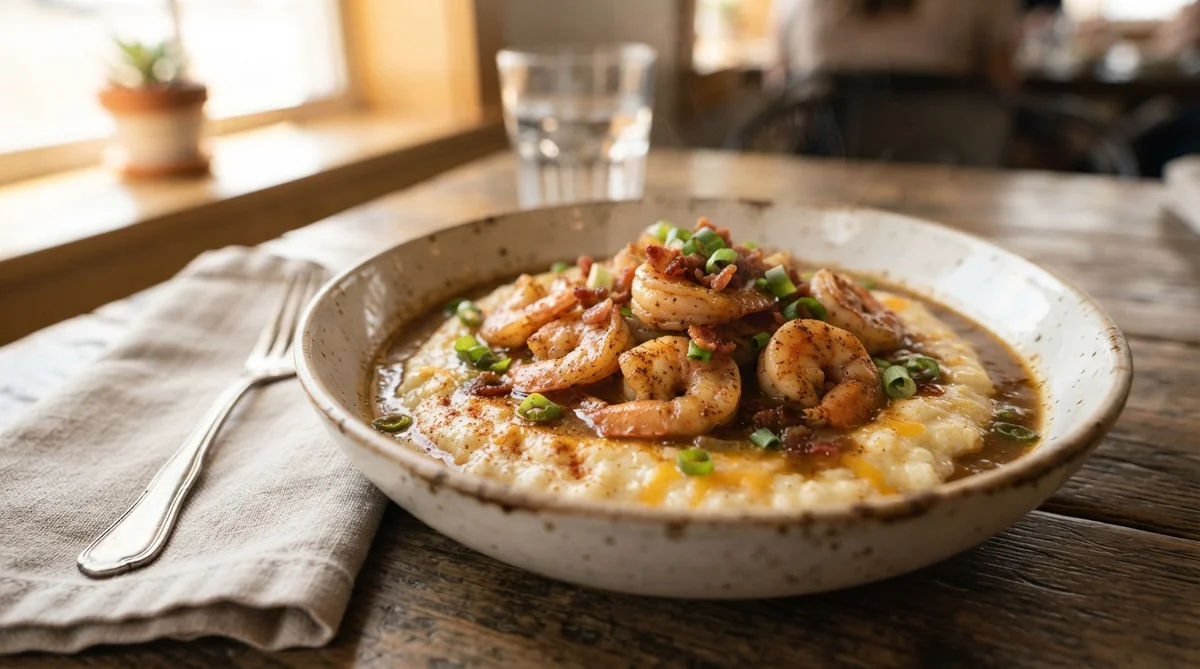
Originally a simple seasonal breakfast eaten by coastal fishermen, shrimp and grits evolved into a celebrated regional landmark dish. Wild Gulf or Atlantic shrimp are sautéed with bacon drippings, garlic, lemon juice, and green onions, then served over warm hominy grits. When planning trips around food, sampling regional variations from coastal diners to upscale dining rooms reveals incredible diversity in gravy spice levels.
The grits are simmered slowly in salted water or milk until coarse corn granules become soft and creamy. Sharp cheddar cheese, butter, and heavy cream are often stirred into the hot grains right before plating. The hot bacon fat coats the shrimp, blending rich pork savory notes with sweet coastal shellfish.
Gumbo and Jambalaya
Gumbo is a deeply seasoned stew anchored by a dark, slow-stirred flour and oil roux. It incorporates the holy trinity of diced celery, onions, and green bell peppers, thickened with okra or sassafras filé powder. As noted in testing guides published by Serious Eats, achieving a true dark brick-colored roux requires constant stirring over medium heat for upwards of 30 minutes.
Jambalaya cooks long-grain rice directly inside a seasoned stock alongside chicken, andouille sausage, and sweet Gulf shrimp. Creole versions feature bright crushed tomatoes, while rural Cajun jambalayas omit tomatoes entirely, obtaining a dark brown color from caramelized meats and charred pan scrapings.
Fried Catfish and Shellfish Boils
Freshwater catfish fillets are soaked in buttermilk, dredged in coarse yellow cornmeal, and fried until crunchy. Traditionally served alongside hushpuppies, dill pickles, and creamy coleslaw, fried catfish remains a staple at weekend fish fries. Selecting venues that source wild-caught native species guarantees superior meat texture and clean flavor, meeting criteria often highlighted when seeking out great seafood restaurant criteria.
Shellfish boils bring entire communities together around outdoor picnic tables lined with butcher paper. Crawfish, white shrimp, or blue crabs are boiled in large pots filled with cayenne spice, lemons, corn on the cob, red potatoes, and garlic bulbs. The hot seafood is dumped directly onto tables for shared hand-eating.
Traditional Sides and Breads
- Soft winter wheat flour yields light, flaky buttermilk biscuits when cut with cold butter or lard.
- Unsweetened cast-iron cornbread provides a crisp outer crust ideal for soaking up vegetable pot liquor.
- Slow-simmered greens absorb savory flavor from smoked ham hocks over hours of gentle bubbling.
- Baked macaroni casseroles rely on milk, eggs, and aged cheddar cheese rather than stove-top flour sauces.
Biscuits and Cornbread
Biscuits rely on low-protein soft winter wheat flour, cold lard or butter, and cold buttermilk to produce tall, tender layers. Pushing dough lightly with fingertips rather than rolling pins preserves air pockets inside the dough. A hot oven quickly converts moisture into steam, lifting biscuit layers skyward.
Cornbread in the Deep South is made almost exclusively with coarsely ground cornmeal, eggs, buttermilk, and hot bacon grease in a preheated cast-iron skillet. The batter sizzles upon contact with hot fat, creating a dark, crunchy bottom crust without sweetening agents.
Collard Greens and Black-Eyed Peas
Collard greens require long simmering in a flavorful pot liquor seasoned with smoked ham hocks, turkey tails, or salt pork. The cooking liquid breaks down tough green fibers, infusing leaves with smoke, fat, and a dash of apple cider vinegar. The resulting broth is drunk directly or scooped up with fresh cornbread.
Black-eyed peas are simmered gently with aromatic diced onions, bay leaves, and pork stock until tender. Traditionally eaten on New Year’s Day alongside collard greens, these field peas symbolize good fortune and financial prosperity for the coming year.
Macaroni and Cheese and Fried Green Tomatoes
Southern macaroni and cheese functions as a baked casserole bound with eggs, milk, and heavy layers of sharp cheddar cheese. Cooked elbow macaroni is folded into custard ingredients, topped with shredded cheese, and baked until the edges turn golden and firm.
Fried green tomatoes utilize unripened firm green tomatoes sliced into uniform disks. Dusted in seasoned flour, dipped in buttermilk, and coated in yellow cornmeal, the slices are pan-fried in hot oil. The firm, tart interior balances against the crunchy salted crust.
Classic Southern Desserts and Pastries
- Banana pudding combines vanilla custard, crisp wafers, and sliced fruit under toasted meringue.
- Fruit cobblers feature warm fruit filling beneath baked biscuit dough or sweet pastry crusts.
- Pecan and sweet potato pies showcase regional crops bound in rich, spiced custard bases.
- Layer cakes celebrate celebratory baking traditions with cream cheese frostings and fruit preserves.
Banana Pudding and Fruit Cobblers
Classic banana pudding layers crisp vanilla wafers, sliced ripe bananas, and cooked vanilla custard inside a baking dish. Covered in fluffy egg-white meringue, the dish is baked briefly until peaks turn golden brown. Modern variations frequently substitute whipped cream for meringue and chill the dessert before serving.
Fruit cobblers showcase seasonal harvests of fresh peaches, blackberries, or sweet dewberries. The sweetened fruit brews in its own juice beneath a thick drop-biscuit topping or lattice pastry crust, baking until juices bubble around golden dough edges.
Pecan, Chess, and Sweet Potato Pies
Pecan pie combines roasted native pecan halves with a rich custard made of eggs, butter, sugar, and dark cane syrup inside a flaky crust. Originally popularized in the early 1900s, it remains a central holiday dessert across the entire region.
Chess pie relies on simple pantry staples including butter, sugar, eggs, and a small spoonful of cornmeal to set the custard. Sweet potato pie highlights roasted sweet potatoes whipped smooth with butter, evaporated milk, nutmeg, and cinnamon, baked inside a par-baked pastry shell.
Hummingbird and Red Velvet Cakes
Hummingbird cake features three spiced cake layers packed with crushed pineapple, mashed bananas, and chopped pecans. Invented in Jamaica and popularized by Southern magazines in the late 1970s, the moist cake is finished with thick cream cheese frosting.
Red velvet cake presents a delicate cocoa cake with a vibrant crimson color, historically achieved through chemical reactions between raw cocoa powder and acidic buttermilk. Modern recipes utilize red food coloring, layering the light sponge with tangy cream cheese icing or traditional cooked flour ermine frosting.
Frequently Asked Questions
- Soul food represents a specific African American subset of Southern cooking focused on intense seasonings and offal cuts.
- Cornmeal grew reliably in warm climates where wheat struggled, making it the dominant regional grain.
- Key seasonings include black pepper, cayenne, garlic, bay leaf, thyme, sage, and smoked pork fat.
What is the difference between Soul Food and Southern food?
Southern food is the broad regional umbrella encompassing all regional styles, including Lowcountry, Cajun, Appalachian, and rural farm cooking. Soul food is the distinct culinary tradition created specifically by African Americans, historically rooted in resourcefulness, heavy seasoning, greens, organ meats, and family heritage.
Why is cornmeal so prominent in classic southern dishes?
Maize adapted exceptionally well to southern soil conditions and warm summers where European wheat varieties frequently failed. Native tribes taught early settlers how to cultivate and process corn, turning cheap, abundant cornmeal into daily breads, batters, and hominy grits.
What are the primary spices used in southern food traditions?
Southern food relies heavily on black pepper, cayenne, hot pepper sauce, garlic, onion powder, dried thyme, bay leaves, and sage. Equal importance is placed on savory fats, where smoked bacon drippings, salt pork, lard, and country ham bones act as foundational seasoning agents for vegetables and grains.