WHAT YOU NEED TO KNOW
French bistro dining is not about elite culinary performance, it is about masterfully executed, time-tested comfort food that rewards simple techniques and high-quality ingredients.
Understanding French bistro classics means appreciating how slow-braised meats, rich sauces, and buttery desserts create a deeply satisfying dining experience without the stiffness of fine dining.
- Bistros originated in Paris in the early 19th century as small, family-run establishments serving hearty, affordable meals to working-class residents.
- According to culinary historical guides, most traditional bistro menus rely on fewer than 12 standard entrees and 10 core main courses that rarely change.
- Traditional slow-cooked dishes like beef bourguignon require up to 24 hours of marinating to achieve their signature depth of flavor.
- The typical house wine, or vin de table, is historically served in a 250-milliliter or 500-milliliter carafe known as a pichet.
While these dishes appear straightforward, their success relies entirely on the quality of basic ingredients like butter, stock, and fresh herbs.
Understanding French Bistro Classics: What Defines a True Bistro?
What exactly separates a bistro from a brasserie or a formal restaurant?
Bistros are defined by their intimate scale, relaxed atmosphere, and focus on classic comfort food. While a grand brasserie might serve hundreds of guests in a vast room, a traditional bistro is typically run by a small family team. To understand how these community-focused establishments evaluate their menus, you can explore how restaurant, world cuisine, and food travel guides work.
- A limited chalkboard menu that changes based on daily market selections.
- A cozy, energetic dining room featuring closely packed wooden tables and a zinc bar.
- Hearty, rustically presented dishes that emphasize slow-cooking and braising.
- An affordable wine selection served by the glass or in simple carafes.
How Do You Navigate Classic French Bistro Starters?
The appetizer course, or les entrées, balances rich elements with acidic dressings to awaken your palate. These starters are intentionally simple and focus on a single key ingredient executed with precision. Sharing several starters is a common way to begin a traditional dining experience.
- Soupe d’Oignon Gratinée: Savory caramelized onion soup with a baked cheese crust.
- Oeufs Mayonnaise: Hard-boiled eggs covered in rich, house-made mustard mayonnaise.
- Escargots de Bourgogne: Tender snails baked in a garlic and parsley butter sauce.
- Steak Tartare: Raw minced beef mixed with capers, shallots, and egg yolk.
- Salade Lyonnaise: Bitter frisée greens tossed with warm bacon fat and a poached egg.
Soupe d’Oignon Gratinée (French Onion Soup)
How does a simple onion transform into such a rich, satisfying soup?
The secret lies in cooking the onions slowly for at least 45 minutes until they caramelize into a sweet paste. This sweet base is simmered in a dark beef stock, then topped with a slice of toasted bread and a thick layer of shredded Gruyère cheese. The bowl is placed under a hot broiler until the cheese is bubbling and golden brown.
Oeufs Mayonnaise
Why is a basic hard-boiled egg considered a benchmark of French kitchen skill?
This dish, often affectionately called oeufs mayo, relies entirely on the quality of its emulsion. The yolk must remain slightly soft at the center, while the mayonnaise must be freshly whisked with sharp Dijon mustard. It is such a cherished classic that an association in France hosts an annual competition to crown the best version.
Escargots de Bourgogne (Garlic Herb Butter Snails)
Are snails truly appealing to a beginner?
Yes, because they act as the perfect vehicle for a decadent sauce of butter, garlic, and fresh flat-leaf parsley. Chefs bake 12 snails in a dimpled ceramic dish designed to catch every drop of the seasoned butter. Diners use specialized tongs to hold the hot shell and a tiny fork to pull the snail out, followed by bread to dip in the dish.
Steak Tartare
How does raw beef become a comforting classic?
When prepared with fresh, hand-chopped beef tenderloin, the texture is incredibly tender. The beef is tossed with capers, chopped cornichons, shallots, Worcestershire sauce, and a raw egg yolk. At renowned Parisian bistros recognized by the Michelin Guide, chefs frequently mix this dish table-side to ensure maximum freshness. Please note that menu offerings and preparation styles at individual venues change regularly, so confirm before dining.
Salade Lyonnaise
Can a salad hold its own against such rich dishes?
This robust specialty from Lyon succeeds by mixing bitter greens with hot, savory components. The salad combines crisp frisée lettuce with thick chunks of warm bacon called lardons. A warm vinaigrette made from the rendered bacon fat coats the leaves, which are then topped with a single poached egg.
Which Iconic Bistro Main Dishes Should You Order?
The main courses, or les plats, represent the peak of French home cooking. These dishes rely on time-honored techniques like braising, curing, and pan-searing. Each dish aims to bring comfort through deep, concentrated flavors.
- Steak Frites: Seared steak served with double-fried potatoes.
- Coq au Vin: Chicken braised slowly in red Burgundy wine.
- Beef Bourguignon: Slow-cooked beef stew made with root vegetables and wine.
- Confit de Canard: Crisp duck legs cooked slowly in duck fat.
- Croque Monsieur: A baked ham and cheese sandwich with béchamel.
- Trout Amandine: Pan-fried trout finished with lemon and toasted almonds.
- Cassoulet: A heavy bean and meat casserole from southern France.
Steak Frites and Steak au Poivre
What makes steak frites the quintessential French bistro main?
The magic comes from pairing a deeply caramelized steak with crisp, golden potatoes. When ordered as steak au poivre, the steak is crusted in crushed black peppercorns and served with a rich cognac pan sauce. Request your steak cooked saignant (medium-rare) to experience the ideal texture and flavor.
Coq au Vin
How does braising chicken in red wine create such intense depth?
This rustic dish requires a 24-hour marinade in red wine to tenderize the meat and infuse it with flavor. The chicken is seared, then simmered slowly with bacon lardons, mushrooms, and sweet pearl onions. The braising liquid is reduced and finished with cold butter to create a glossy sauce.
Beef Bourguignon
What is the secret behind a perfect beef bourguignon?
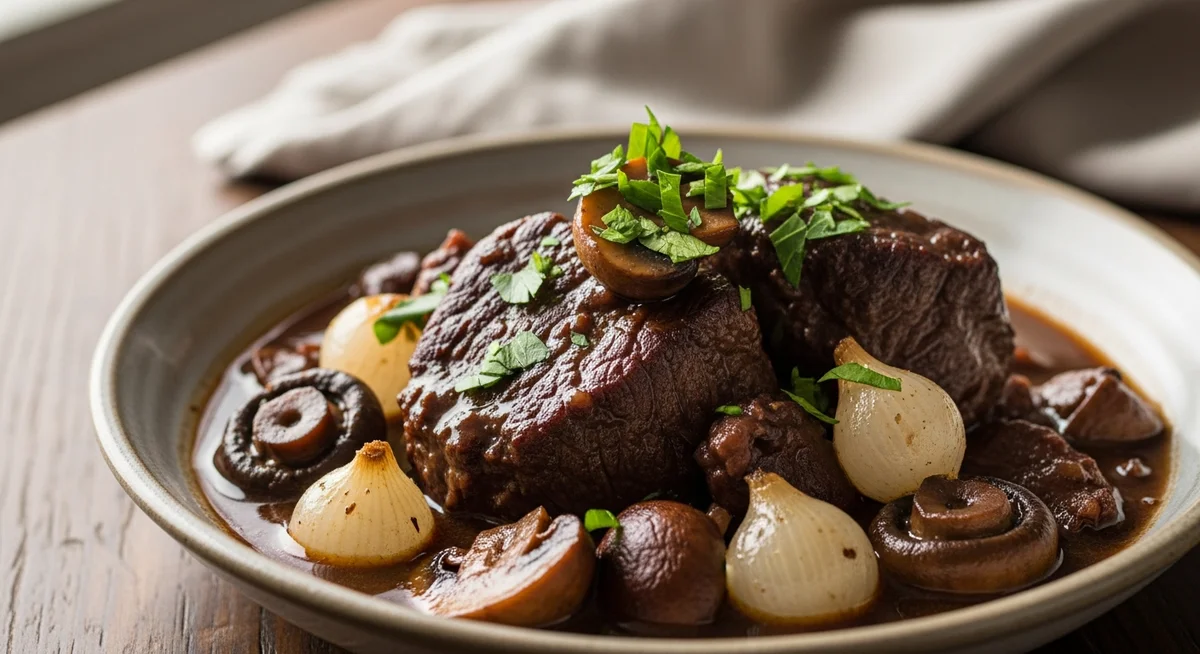
The key is using collagen-rich cuts of beef, like chuck or shank, which break down over a 3-hour simmer. As the collagen melts, it transforms the red wine braising liquid into a velvety, thick gravy. An article by Serious Eats recommends searing the beef in small batches to build a flavorful crust before braising.
Confit de Canard (Duck Confit)
Why is duck confit famously tender?
Duck legs are cured in salt and fresh herbs for 24 hours before cooking slowly in rendered duck fat. They cook at a low temperature of 110 degrees Celsius until the meat easily pulls away from the bone. Just before serving, the chef sears the duck skin-side down in a hot pan to make it thin and crispy.
Croque Monsieur and Croque Madame
How does a simple sandwich win over diners worldwide?
The croque monsieur elevates the ham and cheese sandwich by adding a layer of rich, nutmeg-scented béchamel sauce. The sandwich is topped with grated Gruyère or Comté cheese and baked until bubbling. Adding a fried egg on top turns it into a croque madame, offering a rich yolk that coats each bite.
Trout Amandine
Why is trout amandine a beloved lighter option?
This dish highlights delicate freshwater fish cooked with minimal, high-quality ingredients. The trout is dusted with flour, pan-fried in butter, and topped with toasted sliced almonds and lemon juice. The brown butter, known as beurre noisette, adds a rich aroma that perfectly balances the sweet fish.
Cassoulet
When is the best time to order a rich cassoulet?
This heavy, slow-simmered white bean casserole is best enjoyed on cold evenings. It combines white Tarbais beans, pork sausage, and duck confit in a deep clay pot. Chefs often break the crust that forms on top up to seven times during baking to integrate the flavors.
What Are the Essential Bistro Side Dishes?
While the main courses are impressive, the side dishes, or les accompagnements, complete the meal. They are prepared with the same focus on quality and technique as the primary plates. These sides offer a balance of rich and fresh elements.
- Pommes Purée: Decadent, ultra-smooth mashed potatoes.
- Haricots Verts Amandine: Snappy green beans tossed with butter and almonds.
Pommes Purée (French Mashed Potatoes)
How do French mashed potatoes achieve their famous texture?
The difference lies in the butter-to-potato ratio, which can reach one part butter to two parts potato. The potatoes are pushed through a fine ricer or food mill multiple times to remove all lumps