
WHAT YOU NEED TO KNOW
Poke is a traditional Hawaiian staple made from clean-cut cubes of raw fish tossed with sea salt, limu seaweed, and roasted kukui nuts, standing distinct from modern mainland salad bowls.
- Hawaiian origin: Invented centuries ago by native island fishermen who seasoned raw reef fish cut-offs with 100% natural local ingredients.
- Core protein: Yellowfin tuna (ʻahi) and octopus (heʻe) represent over 80% of local poke counter sales across Hawaii.
- Pronunciation: Correctly spoken as POH-kay, a native Hawaiian verb meaning to slice or cut crosswise into pieces.
While mainland versions add dozens of toppings and grain bases, authentic island poke emphasizes high-grade, heavily marinated fresh seafood served in simple portions.
What Is Poke?
When asking what is poke, the answer begins in the Hawaiian islands. Poke is a native dish centered on cubed raw seafood marinated with savory seasonings, native sea salt, and aromatic seaweeds. The word itself translates directly from Hawaiian as to slice or cut crosswise into pieces, describing the thick, rectangular bite-sized chunks that define its texture.
Unlike rolled sushi or lightly cured ceviche, poke features firm, un-cured fish that absorbs rich marinades built on soy sauce and toasted sesame oil. When visiting island counters or evaluating seafood options at home, understanding best seafood restaurant standards helps diners recognize the immaculate freshness required for this dish. High-grade raw fish remains the undisputed star, with seasonings chosen to enhance rather than obscure the delicate ocean flavor.
The History and Origins of Hawaiian Poke
Traditional Hawaiian Roots
To understand the history of poke food, one must look to ancient Polynesian fishing communities. Long before foreign contact, native Hawaiian fishermen sliced small reef fish or cut-offs from larger catches to consume as a quick, nourishing snack. They seasoned the raw flesh using raw sea salt, crushed roasted candlenuts known as ʻinamona, and fresh limu seaweed gathered directly from shallow coastal reefs.
During the late 18th century, incoming sailing ships introduced sweet onions to the islands, which quickly became a structural crunch in island prep. By the mid-19th century, immigrant plantation workers from Japan and China introduced soy sauce (shoyu) and toasted sesame oil. These East Asian staples fused seamlessly with native ingredients, establishing the iconic shoyu ahi style enjoyed today across the Pacific.
Modern Evolution and Global Popularity
The transformation of poke into a commercial restaurant dish took off during the 1970s, as local seafood counters began selling pre-marinated tubs by the pound. The dish gained culinary prestige in the early 1990s through the Hawaii Regional Cuisine movement, spearheaded by local chefs like Sam Choy, who organized competitive island festivals showcasing innovative seafood preparations.
By the 2010s, fast-casual build-your-own bowl restaurants spread across the continental United States and international food capitals. Food writers at Serious Eats note that while island poke remains focused on heavily dressed seafood bought by weight, mainland variations evolved into complete single-bowl meals balanced over rice, quinoa, and crisp fresh vegetables.
Key Ingredients of a Poke Bowl
Creating an authentic bowl requires balancing crisp textures, rich oils, and delicate fish. While traditional hawaiian poke ingredients remain delightfully simple, modern kitchens draw from a wide pantry of proteins and marinades.
Raw Fish and Protein Options
- ʻAhi (Yellowfin or Bigeye Tuna): The definitive centerpiece of traditional poke, praised for its dense texture and deep ruby color.
- Heʻe (Octopus): Commonly known by its Japanese name tako, this protein is tenderized and cooked before slicing to offer a satisfying, chewy bite.
- Salmon: High in healthy fats, fresh king or Atlantic salmon provides a rich, buttery profile popular in modern raw bars.
- Tofu and Kona Kampachi: Firm pressed tofu offers a plant-based alternative, while sustainably farmed Hawaiian yellowtail yields an ultra-clean ocean flavor.
Sauces and Seasonings
- Shoyu (Soy Sauce): Provides the essential umami base that cures the exterior of the sliced fish.
- Toasted Sesame Oil: Adds a fragrant, nutty aroma that binds salt and citrus juices to the seafood.
- ʻInamona: Roasted, crushed kukui nuts (candlenuts) that deliver an earthy crunch unique to traditional island recipes.
- Limu: Edible marine algae, such as limu kohu or limu manauea, bringing natural brine and ocean minerality to every batch.
Bases and Toppings
- Rice Base: Warm sticky white rice or short-grain sushi rice offers a hot contrast to chilled raw fish.
- Sweet Maui Onions: Sliced thin to deliver mild sharpness and refreshing crunch without overpowering the marinade.
- Green Onions and Sesame Seeds: Essential garnishes that add color, aroma, and subtle nuttiness.
- Tobiko and Masago: Tiny flying fish or capelin roe that pop in the mouth, introducing a salty burst of sea flavor.
Popular Types of Poke Bowls
Classic Hawaiian Style
Traditional island poke keeps the spotlight entirely on the seafood. Purchased at grocery fish counters or coastal roadside stands, classic shoyu ahi features generous chunks of tuna slick with soy sauce, sesame oil, scallions, and sea salt. It is commonly enjoyed straight out of a container with a toothpick or eaten alongside a side of warm rice.
Another classic variant is limu poke, which skips soy sauce entirely in favor of Hawaiian sea salt, crushed candlenuts, and fresh seaweed. Those planning a food-focused trip to Hawaii will find these minimalist recipes served across neighborhood markets rather than elaborate fast-casual establishments.
Modern Fusion Creations
Mainland-style bowls transform the traditional dish into a fully customizable salad meal. Diners start with a base of brown rice, salad greens, or kelp noodles before adding marinated raw fish, spicy sriracha mayo, ponzu, or sweet unagi sauce.
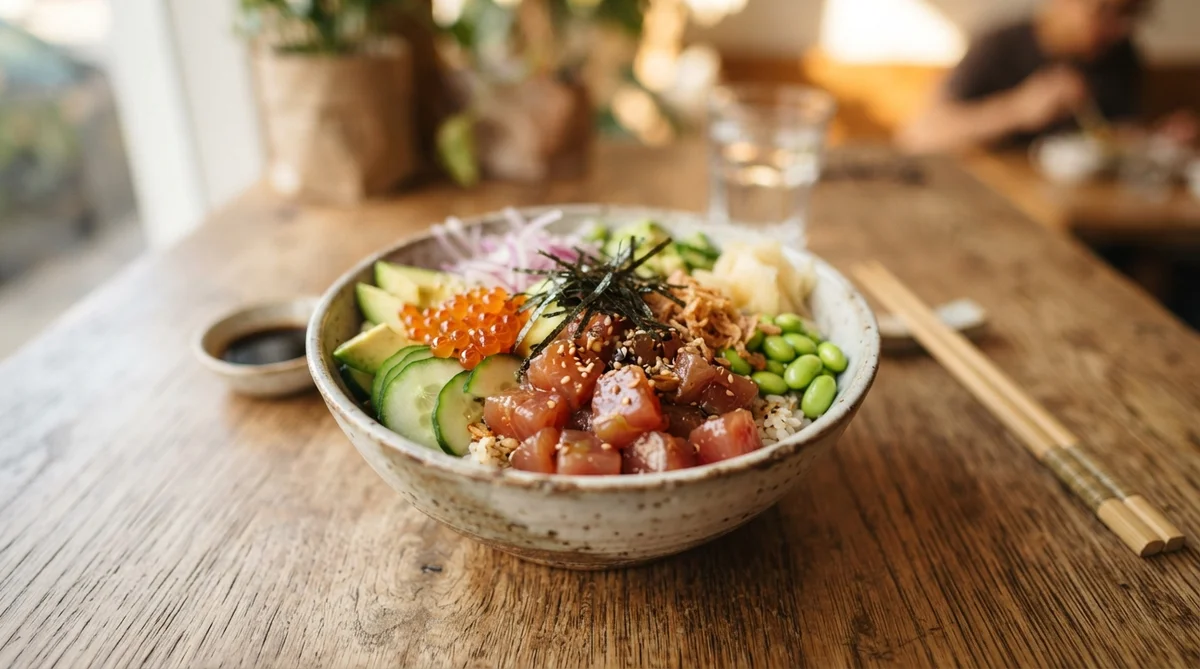
These modern variations feature diverse additions like sliced avocado, edamame, pickled ginger, sea cucumber, and crunchy garlic chili oil. While purists argue these additions mask the delicate taste of raw ahi, fusion bowls offer an approachable entry point for diners exploring global seafood dishes.
Poke vs. Sushi: What’s the Difference?
Although both dishes highlight raw fish, poke and sushi differ significantly in origin, cutting techniques, and seasoning methods. The James Beard Foundation highlights that while Japanese sushi emphasizes pristine rice seasoned with vinegar, Hawaiian poke relies on heavily dressed seafood cut into thick, uniform cubes.
| Feature | Hawaiian Poke | Japanese Sushi |
|---|---|---|
| Primary Origin | Hawaii (Polynesian roots) | Japan |
| Seafood Cut | Thick, 3/4-inch cubes | Thin slices (Nigiri) or strips (Maki) |
| Marinade Method | Tossed and steeped in sauce beforehand | Unmarinated; dipped lightly at table |
| Rice Role | Optional base underneath seafood | Essential seasoned vinegared core |
| Key Flavor Profile | Soy, sesame oil, green onion, nuttiness | Clean fish, sour rice, wasabi, soy dip |
Where sushi chefs showcase meticulous knife skills and precise rice temperature, poke cooks emphasize bold, harmonious marinades that coat raw protein pieces completely. Dining traditions across Asia and the Pacific celebrate both approaches, much like how Japanese izakaya dining traditions highlight small, seasoned raw seafood bites served alongside cold drinks.
How to Build Your Own Poke Bowl
Creating a balanced raw seafood bowl at home requires clean knife work and cold ingredients. Follow these essential steps for a restaurant-quality meal:
- Source sushi-grade fish: Select fresh, flash-frozen yellowfin tuna or salmon from a trusted fishmonger, keeping it chilled at 38 degrees Fahrenheit until prep.
- Cube the seafood uniformly: Slice the raw fish into sharp 3/4-inch cubes using a very sharp chef’s knife, taking care not to crush the delicate tissue.
- Marinate lightly: Toss the raw cubes with two tablespoons of high-quality shoyu, one teaspoon of toasted sesame oil, sliced Maui sweet onions, and chopped scallions. Let sit in the refrigerator for 15 minutes.
- Assemble contrasting bases: Scoop hot, steamed white rice or fresh mixed greens into a deep bowl, creating a stable foundation for the chilled protein.
- Top and serve immediately: Spoon the marinated seafood over the warm rice, finishing with toasted sesame seeds, crisp seaweed flakes, and fresh avocado slices.
Frequently Asked Questions About Poke
Is poke always served raw?
While high-grade raw ahi tuna and salmon are standard, poke does not have to be completely raw. Octopus (heʻe) is almost always blanched or boiled before slicing to ensure a tender bite. Modern menus also feature cooked poached shrimp, seared tofu, or char-broiled pipikaula (Hawaiian cured beef).
How do you pronounce poke correctly?
The correct native Hawaiian pronunciation is POH-kay, rhyming roughly with okay. Pronouncing it poke like the English verb to prod is a common mistake among first-time diners.
How long does fresh poke last in the fridge?
Freshly dressed poke made with raw seafood is best enjoyed on the day it is prepared. When stored in an airtight glass container at 38 degrees Fahrenheit or below, fresh raw poke retains high quality for up to 24 hours. Beyond 24 hours, acid and salt in sauces degrade the texture of the fish, making it soft and overly salty.